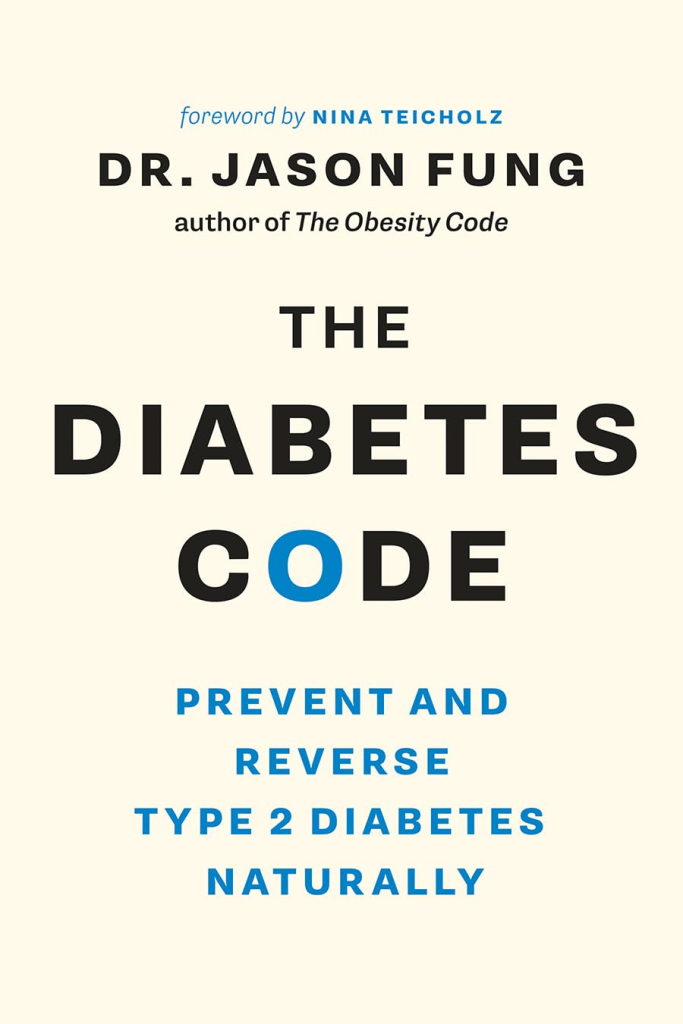
The Diabetes Code: Prevent and Reverse Type 2 Diabetes Naturally by Dr. Jason Fung
In The Diabetes Code, renowned Canadian nephrologist Dr. Jason Fung challenges decades of medical orthodoxy by demonstrating that type 2 diabetes is not a chronic, progressive, or irreversible disease, but a fully preventable and reversible dietary condition. By identifying hyperinsulinemia—excessive circulating insulin driven by refined carbohydrates and sugar—as the true root cause, Dr. Fung exposes how conventional drug-focused treatments exacerbate organ fat accumulation and weight gain. This groundbreaking work offers a practical, drug-free blueprint to clear visceral fat, restore insulin sensitivity, and achieve complete metabolic health through low-carbohydrate eating and intermittent fasting.
Super Summary
Who May Benefit
- Type 2 Diabetics & Prediabetics: Individuals seeking a natural, drug-free pathway to reverse their condition and taper off medications.
- Healthcare Professionals & Physicians: Doctors, nurses, and dietitians looking for an evidence-based metabolic paradigm beyond pharmaceutical management.
- Weight Loss Seekers: People struggling with central obesity, fatty liver, or plateaued weight loss on traditional low-calorie diets.
- Health-Conscious Professionals: Readers interested in preventive health, longevity, and eliminating sugar-induced metabolic disease.
Top 3 Key Insights
- Reversible Root Cause: Type 2 diabetes is a reversible dietary condition caused by hyperinsulinemia, not an irreversible progressive genetic disorder.
- Medication Paradox: Prescribing insulin or insulin-stimulating drugs treats the symptom of high blood sugar while accelerating organ fat accumulation and weight gain.
- Organ Fat Clearance: Combining carbohydrate restriction with intermittent fasting lowers insulin levels, allowing the body to burn off toxic organ fat and cure diabetes.
4 More Takeaways
- Visceral Fat Dominance: Fat stored inside abdominal organs (liver and pancreas) drives insulin resistance, not subcutaneous fat under the skin.
- Fructose Toxicity: Fructose directly causes fatty liver disease without triggering initial blood sugar spikes on standard medical tests.
- Calorie Myth: Traditional calorie-counting diets trigger metabolic slowdown and hunger, whereas fasting preserves metabolic rate and muscle mass.
- Protective Mechanisms: Insulin resistance and central obesity are the body’s protective adaptations to sequester toxic excess sugar away from circulation.
Book in 1 Sentence
Dr. Jason Fung reveals that type 2 diabetes is a reversible dietary disease caused by hyperinsulinemia, curable through carbohydrate restriction and intermittent fasting.
Book in 1 Minute
The Diabetes Code completely upends standard medical dogma by exposing type 2 diabetes as a fully preventable and reversible dietary condition rather than a chronic, progressive disease. Canadian nephrologist Dr. Jason Fung demonstrates that elevated blood sugar is merely a symptom of hyperinsulinemia—an overload of insulin driven by excessive dietary glucose and fructose. While conventional treatments prescribe insulin and medications that force sugar into overstuffed cells, this approach exacerbates organ fat accumulation, weight gain, and disease progression. Instead, Dr. Fung presents a natural, drug-free solution based on two core principles: stop putting sugar into the body via low-carbohydrate, healthy-fat eating, and burn off existing stored sugar through intermittent fasting. By targeting the root cause, readers gain an empowering roadmap to restore insulin sensitivity, burn visceral organ fat, eliminate medications, and reclaim lifelong metabolic health.
One Unique Aspect
The book’s most distinctive perspective is the Overflow Paradigm, which replaces the traditional “broken lock-and-key” theory of insulin resistance with the revelation that cells resist glucose simply because they are overstuffed with fat and sugar. Dr. Fung illustrates this concept using the memorable Subway Train Metaphor, showing how forcing more insulin into full cells creates metabolic disaster.
Chapter-wise Summary
Chapter 1: How Type 2 Diabetes Became an Epidemic
“In just a generation, diabetes has gone from rarity to epidemic.”
Over the past four decades, type 2 diabetes has transformed from an obscure medical condition into a catastrophic global health crisis. This epidemic directly coincides with the adoption of low-fat, high-carbohydrate nutritional guidelines in the late 1970s. Despite spending billions of dollars on research and pharmaceutical development, public health authorities have largely failed to curb the disease. Instead, standard medical consensus treats type 2 diabetes as a chronic, progressive, and irreversible condition requiring lifelong medication dependence. By focusing exclusively on managing blood glucose levels with drugs rather than addressing the underlying dietary root cause, modern healthcare management has unwittingly fueled the very epidemic it set out to conquer. Reversing this crisis requires abandoning flawed dietary advice and recognizing that a dietary disease demands a dietary solution.
Historical Paradigm Shift Framework:
- 19th Century: Low-carbohydrate diets were standard treatment for diabetes.
- 1922: Discovery of pharmaceutical insulin shifted focus to drug management.
- 1977–1980: Public health guidelines promoted low-fat, high-carbohydrate diets.
- Modern Era: Global explosion of obesity and type 2 diabetes due to persistent hyperinsulinemia.
Chapter Key Points:
- Type 2 diabetes is a modern dietary epidemic.
- Standard drug treatments fail the root cause.
- Reversing diabetes requires fundamental dietary changes.
Chapter 2: The Differences between Type 1 and Type 2 Diabetes
“Type 1 and Type 2 diabetes are completely different diseases that share only one common symptom: high blood sugar.”
Understanding the medical difference between Type 1 and Type 2 diabetes is crucial for effective treatment. Type 1 diabetes is an autoimmune condition in which the immune system destroys pancreatic beta cells, resulting in an absolute deficiency of insulin that requires exogenous insulin for survival. In contrast, Type 2 diabetes is a condition characterized by hyperinsulinemia and insulin resistance; the body produces abundant or excessive insulin, but the cells are overloaded and unable to respond efficiently. Treating Type 2 diabetes with additional insulin injections confuses a symptom (high blood sugar) with the disease itself (insulin excess). Adding more insulin to an already hyperinsulinemic body drives weight gain, worsens insulin resistance, and accelerates long-term organ damage.
Comparative Model of Diabetes Types:
- Type 1 Diabetes: Autoimmune Destruction → Zero Insulin → Requires Insulin Therapy → Underfilled State.
- Type 2 Diabetes: Dietary Carbohydrate Overload → Excessive Insulin → Insulin Resistance → Overfilled State.
Chapter Key Points:
- Type 1 is insulin deficiency; Type 2 is excess.
- High blood sugar is a symptom, not cause.
- Prescribing insulin for Type 2 accelerates disease.
Chapter 3: The Whole Body Effect
“You can’t use drugs to cure a dietary disease.”
Type 2 diabetes is unique among chronic conditions because excessive internal glucose accumulation inflicts damage on virtually every tissue and organ system in the human body. Complications fall into two main categories: microvascular damage, which affects small blood vessels and leads to blindness (retinopathy), kidney failure (nephropathy), and nerve damage (neuropathy); and macrovascular damage, which leads to heart attacks, strokes, and peripheral vascular disease resulting in amputations. Conventional blood sugar-lowering medications lower glucose readings in the bloodstream by forcibly driving sugar into surrounding organ tissues. As a result, patients may achieve improved blood sugar numbers while their eyes, kidneys, nerves, and heart continue to deteriorate. True prevention and reversal require eliminating excess glucose from the body entirely rather than hiding it inside vital organs.
The Organ Toxicity Map:
- Microvascular Damage: Retinopathy (Eyes) + Nephropathy (Kidneys) + Neuropathy (Nerves).
- Macrovascular Damage: Atherosclerosis (Arteries) + Myocardial Infarction (Heart) + Stroke (Brain) + Peripheral Vascular Ulcers (Limb Amputation).
Chapter Key Points:
- Diabetes inflicts damage across every organ system.
- Medications hide blood sugar inside tissue cells.
- True recovery requires clearing total body sugar.
Chapter 4: Diabesity: The Calorie Deception
“Eat less, move more has failed because obesity is a hormonal, not a caloric, imbalance.”
The conventional “Calories In, Calories Out” model of weight management has proven to be an utter failure in addressing the twin epidemics of obesity and type 2 diabetes. Body weight and fat distribution are regulated by complex hormonal signals, primarily insulin, rather than simple energy arithmetic. Severe caloric restriction without changing food quality triggers metabolic adaptation, slowing basal metabolic rate and driving intense hunger. Furthermore, metabolic dysfunction is specifically linked to central or visceral obesity—fat deposited inside and around abdominal organs—rather than subcutaneous fat under the skin. Thin individuals with visceral fat (TOFI: Thin on the Outside, Fat on the Inside) face the same diabetic risks as visibly obese individuals. Addressing diabesity requires lowering the hormonal drivers of visceral fat storage rather than counting calories.
Visceral vs. Subcutaneous Fat Model:
- Subcutaneous Fat: Stored under skin → Metabolically benign → Cosmetic concern.
- Visceral / Ectopic Fat: Infiltrates liver, pancreas, and organs → Drives insulin resistance, hypertension, and metabolic syndrome.
Chapter Key Points:
- Obesity is driven by hormones, not calories.
- Visceral organ fat causes severe metabolic damage.
- Calorie-counting diets slow metabolic energy expenditure.
Chapter 5: The Role of Insulin in Energy Storage
“Insulin is a storage hormone that tells the body to store fat and stop burning it.”
Insulin functions as the body’s principal energy storage hormone, tightly regulating whether ingested calories are burned for immediate energy or stored for future use. Eating dietary carbohydrates and protein stimulates insulin release, signaling the liver to store glucose as glycogen and convert excess glucose into new fat through De Novo Lipogenesis (DNL). Conversely, during fasting periods when insulin levels fall, the body switches to burning stored glycogen and fat. Constant eating or consuming high-carbohydrate foods keeps insulin levels continuously elevated. This persistent hyperinsulinemia locks energy inside fat cells and blocks access to stored body fat, making fat burning biochemically impossible and driving continuous weight gain and insulin resistance over time.
The Two-Compartment Energy Storage Model:
- Compartment 1 (The Refrigerator / Glycogen): Limited capacity, fast access, easily filled/emptied by liver.
- Compartment 2 (The Freezer / Body Fat): Unlimited capacity, long-term storage, locked when insulin levels are high.
Chapter Key Points:
- Insulin controls fat storage versus fat burning.
- Frequent meals prevent access to stored energy.
- High insulin traps calories inside fat tissue.
Chapter 6: Insulin Resistance: The Overflow Phenomenon
“The cell is not starving; it is overfilled with glucose, spilling over into the blood.”
Traditional medicine incorrectly viewed insulin resistance as a “broken lock-and-key” mechanism where glucose could not enter starved cells. In reality, insulin resistance is an Overflow Phenomenon: cells become so congested and overstuffed with glucose and fat that they physically refuse to admit any more. To illustrate this phenomenon, consider the Subway Train Metaphor. During rush hour, subway pushers (insulin) force passengers (glucose) into an already crowded subway car (the cell). When the train car becomes completely packed, no additional passengers can fit inside regardless of how forcefully the pushers shove. The resulting spillover of passengers onto the platform represents elevated blood glucose levels in the bloodstream. Forcing more insulin onto the cell only exacerbates cellular congestion.
The Overflow Paradigm & Subway Train Analogy:
- Subway Car: Liver or muscle cell.
- Passengers: Incoming glucose molecules.
- Subway Pushers: Circulating insulin hormones.
- Insulin Resistance: Extreme internal pressure inside the car prevents entry, causing glucose spillover into blood.
Chapter Key Points:
- Insulin resistance is cellular glucose congestion.
- Cells resist glucose because they are full.
- Adding insulin worsens cellular overflow congestion.
Chapter 7: Diabetes, a Disease of Dual Defects
“Too much sugar causes type 2 diabetes. Ockham’s razor cuts through the confusion.”
Type 2 diabetes develops through twin interlocking vicious cycles: the Hepatic Cycle and the Pancreatic Cycle. In the initial phase, excessive dietary sugar intake leads to persistent hyperinsulinemia, driving fat creation in the liver. This fatty liver creates hepatic insulin resistance, requiring the pancreas to produce even higher levels of insulin to keep blood sugar normal. Over time, the bloated liver exports excess fat via VLDL particles to other organs, including the pancreas. In the second phase, fat accumulates inside the pancreas (fatty pancreas), causing beta-cell dysfunction where insulin production falters. This loss of compensation leads to a rapid spike in blood sugar and the clinical diagnosis of diabetes. Both defects stem from intra-organic fat accumulation.
The Twin Vicious Cycles Model:
- Cycle 1 (Hepatic Cycle): Excess Carbs → Hyperinsulinemia → Fatty Liver → Insulin Resistance → Compensatory Hyperinsulinemia.
- Cycle 2 (Pancreatic Cycle): Excess Liver Fat Export (VLDL) → Fatty Pancreas → Beta-Cell Dysfunction → Blood Sugar Spike → Type 2 Diabetes.
Chapter Key Points:
- Diabetes involves two linked organ cycles.
- Fatty liver causes resistance; fatty pancreas causes dysfunction.
- Both cycles stem from excessive dietary sugar.
Chapter 8: The Fructose-Insulin Resistance Connection
“Fructose is the most dangerous form of sugar because it goes straight to the liver.”
Fructose represents a uniquely toxic driver of type 2 diabetes compared to glucose. While every cell in the human body can utilize glucose for energy, fructose can only be metabolized by the liver. When processed foods, table sugar, or high-fructose corn syrup are consumed, the entire fructose load hits the liver directly. The liver rapidly converts this excess fructose into fat via De Novo Lipogenesis (DNL), leading directly to fatty liver disease—the primary driver of insulin resistance. Because fructose does not immediately raise blood glucose levels, it insidiously causes severe metabolic destruction without triggering initial warning signs on standard blood sugar tests. Removing refined fructose is vital for metabolic recovery.
Metabolic Comparison: Glucose vs. Fructose:
- Glucose Pathway: Dispersed across entire body (80% used by organs) → 20% to liver → Stored as glycogen or burned.
- Fructose Pathway: Bypasses rest of body → 100% targeted to liver → Converted directly into liver fat (DNL) → Drives fatty liver.
Chapter Key Points:
- Fructose is metabolized solely by the liver.
- Fructose directly drives fatty liver creation.
- Fructose causes silent, severe insulin resistance.
Chapter 9: The Metabolic Syndrome Connection
“Metabolic syndrome, obesity, and type 2 diabetes are all symptoms of a single root cause: too much sugar.”
Metabolic syndrome represents a cluster of interconnected cardiovascular and metabolic risk factors, including abdominal obesity, elevated blood pressure, high triglycerides, low HDL cholesterol, and high fasting blood sugar. Rather than being separate diseases, all components of metabolic syndrome share a single underlying etiology: hyperinsulinemia driven by excessive dietary sugar and carbohydrate intake. Interestingly, conditions like central obesity, insulin resistance, and beta-cell dysfunction are protective physiological adaptations designed to sequester toxic sugar away from circulation. When the body’s storage capacity is overwhelmed, metabolic syndrome manifests. Treating individual symptoms with separate drugs fails; addressing root hyperinsulinemia resolves all aspects of metabolic syndrome simultaneously.
The Metabolic Syndrome Cascade:
- Root Cause: High Glucose & Fructose Intake.
- Primary Driver: Hyperinsulinemia.
- Downstream Manifestations: Fatty Liver → High Triglycerides & Low HDL + Central Obesity + Hypertension + High Blood Sugar (Type 2 Diabetes).
Chapter Key Points:
- Hyperinsulinemia drives all metabolic syndrome symptoms.
- Obesity acts as a protective storage buffer.
- Curing hyperinsulinemia resolves all cluster conditions.
Chapter 10: Insulin: Not the Answer for Type 2 Diabetes
“Prescribing insulin for type 2 diabetes is like pouring gasoline on a fire.”
Standard medical guidelines recommend increasing doses of pharmaceutical insulin when oral diabetes medications fail. However, prescribing insulin for type 2 diabetes represents a fundamental logical flaw. Because type 2 diabetes is a state of severe hyperinsulinemia, adding exogenous insulin increases circulating insulin levels, driving massive weight gain, worsening insulin resistance, and accelerating organ toxicity. Major randomized controlled trials—including ACCORD, ADVANCE, and VADT—proved that intensive blood glucose lowering using insulin failed to reduce cardiovascular events or overall mortality in type 2 diabetics. Injected insulin successfully lowers blood sugar readings only by forcibly packing toxic glucose deeper into overfilled organ tissues, aggravating the primary disease process.
The Gasoline on Fire Paradox:
- Problem: Type 2 diabetes is caused by excess insulin (hyperinsulinemia).
- Conventional Treatment: Inject more insulin to lower blood glucose.
- Result: Forces sugar into tissue → Increases weight gain → Deepens insulin resistance → Requires higher insulin doses.
Chapter Key Points:
- Insulin therapy worsens underlying hyperinsulinemia.
- Intensive insulin causes substantial weight gain.
- Lowering blood sugar via insulin fails mortality reduction.
Chapter 11: Oral Hypoglycemics: Not the Answer
“Medications make blood sugar numbers look good while the patient gets sicker.”
A wide variety of oral hypoglycemic medications are prescribed to manage type 2 diabetes, yet none of them cure the disease. Sulfonylureas force the pancreas to secrete more insulin, causing weight gain and eventual beta-cell burnout. Thiazolidinediones (TZDs) improve insulin sensitivity by creating new fat cells, leading to weight gain and heart failure risk. Newer agents like DPP-4 inhibitors and GLP-1 analogs offer minor benefits but remain expensive symptom managers. Metformin and SGLT2 inhibitors help prevent glucose absorption or promote urinary excretion, but they cannot overcome ongoing high-carbohydrate intake. All oral drugs treat the symptom of high blood sugar while leaving the root cause—dietary sugar overload—untouched.
Pharmaceutical Evaluation Framework:
- Insulin Enhancers (Sulfonylureas, Meglitinides): Increase insulin → Drive weight gain → Accelerate progression.
- Fat Creators (TZDs): Store sugar as fat → Cause weight gain & fluid retention.
- Glucose Excretors (SGLT2 inhibitors, Metformin): Help dump glucose → Beneficial adjuncts, but cannot fix bad diets.
Chapter Key Points:
- Diabetes drugs manage symptoms without curing disease.
- Insulin-boosting drugs cause weight gain and harm.
- Reversal requires dietary removal of excess sugar.
Chapter 12: Low-calorie Diets and Exercise: Not the Answer
“You cannot exercise your liver to health; reversing diabetes depends on dietary change.”
Conventional medical advice relies on low-fat, low-calorie diets and exercise as standard lifestyle management for type 2 diabetes. Low-fat diets recommend eating frequent, carbohydrate-heavy meals, which keeps insulin levels continuously elevated throughout the day and prevents fat burning. Meanwhile, exercise expenditure pales in comparison to daily caloric intake and primarily utilizes skeletal muscle glycogen rather than clearing fat from the liver—the epicentral site of insulin resistance. To understand this, consider the Faucet and Drain Model: when a bathtub is overflowing from a fully open faucet (high-carb diet), attempting to scoop water out with a tiny spoon (exercise) will fail. Reversal requires shutting off the faucet.
The Faucet and Drain Model:
- The Faucet: Inflow of dietary glucose and fructose.
- The Tub: Body’s total sugar storage capacity.
- The Drain: Exercise and basal metabolic burn rate.
- Solution: Trying to widen the drain with exercise cannot stop an overflowing tub; you must turn off the dietary faucet.
Chapter Key Points:
- Low-fat guidelines perpetuate continuous insulin elevation.
- Exercise cannot offset high carbohydrate intake.
- Reversing diabetes requires turning off sugar inflow.
Chapter 13: Lessons from Bariatric Surgery
“Bariatric surgery reverses diabetes not by altering anatomy, but by forcing sudden, severe caloric restriction.”
Bariatric surgical procedures, such as Roux-en-Y gastric bypass and sleeve gastrectomy, result in dramatic and immediate reversal of type 2 diabetes within days of surgery—long before substantial body weight is lost. Historical hypotheses suggested that rerouting gut anatomy or altered intestinal hormones caused this remission. However, clinical evidence proves that surgical success stems entirely from sudden, severe caloric and carbohydrate restriction post-operation. Forced starvation rapidly depletes liver glycogen, forcing the body to burn visceral fat stored inside the liver and pancreas. Clearing organ fat restores normal insulin sensitivity and beta-cell function. Crucially, the exact same metabolic benefits can be achieved naturally through dietary fasting without surgical risks.
Surgical Reversal Physiology:
- Phase 1 (Days 1–7): Severe intake restriction → Rapid liver glycogen depletion.
- Phase 2 (Weeks 1–2): Visceral fat burn → Fatty liver clears → Insulin resistance resolves.
- Phase 3 (Weeks 2–4): Pancreatic fat clears → Normal insulin secretion returns → Diabetes cured.
Chapter Key Points:
- Surgery proves type 2 diabetes is fully reversible.
- Burning organ fat restores normal insulin function.
- Dietary fasting matches surgical results without risks.
Chapter 14: Carbohydrate-reduced Diets
“If the problem is too much sugar, the solution is simple: stop putting sugar in.”
The primary dietary strategy for preventing and reversing type 2 diabetes is a Low-Carbohydrate, Healthy-Fat (LCHF) diet. Because dietary carbohydrates stimulate insulin production far more than protein or fat, eliminating refined grains, starches, and added sugars immediately lowers blood glucose and insulin levels. Reducing insulin turns off fat creation and allows the body to access stored body fat for fuel. A healthy LCHF protocol emphasizes real, unprocessed, whole foods—including natural fats from avocados, olive oil, butter, nuts, and eggs—while strictly avoiding processed foods, refined flours, sugar-sweetened beverages, and industrial seed oils high in omega-6 fatty acids.
The 3 Rules for Reversing Type 2 Diabetes:
- Rule 1: Eliminate Added Sugars & Sweeteners: Avoid sucrose, fructose, HFCS, and artificial sweeteners.
- Rule 2: Reduce Refined Carbs & Enjoy Natural Fats: Replace bread, pasta, and rice with wholesome natural fats.
- Rule 3: Eat Real Unprocessed Food: Stick to foods that exist in nature without industrial processing.
Chapter Key Points:
- Carbohydrate restriction drastically lowers insulin levels.
- Natural fats do not trigger insulin release.
- Real, unprocessed foods restore metabolic health naturally.
Chapter 15: Intermittent Fasting
“Fasting is the most powerful natural therapy available for type 2 diabetes.”
Intermittent fasting—the voluntary abstinence from food—is the ultimate therapeutic tool for clearing excess sugar from the body and reversing type 2 diabetes. Unlike continuous calorie restriction, which slows basal metabolic rate and burns lean muscle, intermittent fasting maintains metabolic rate, preserves lean muscle tissue, and specifically targets visceral fat in the liver and pancreas. Dr. Fung’s Intensive Dietary Management (IDM) program utilizes structured fasting protocols—such as 24-hour, 36-hour, or 42-hour fasts three times per week—alongside an LCHF diet. Fasting lowers insulin to baseline levels, enabling rapid depletion of toxic organ fat, normalization of blood sugar, and complete elimination of diabetic medications.
Step-by-Step Intermittent Fasting Protocol:
- Step 1: Protocol Selection: Choose schedule (e.g., 36-hour fast 3x weekly for active diabetes).
- Step 2: Fasting Window: Consume non-caloric fluids only (water, green/black tea, black coffee, bone broth).
- Step 3: Breaking the Fast: Eat LCHF real food meals; avoid carbohydrate binges.
- Step 4: Monitoring: Track blood sugar closely and taper medications under physician supervision.
Chapter Key Points:
- Fasting maximally lowers insulin and burns organ fat.
- Fasting preserves metabolic rate and muscle mass.
- Structured protocols allow safe elimination of drugs.
10 Notable Quotes
- “You can’t use drugs to cure a dietary disease.”
- “Type 2 diabetes is a fully reversible and preventable disease.”
- “High blood glucose is only the symptom, not the cause. The root cause is high insulin resistance.”
- “Prescribing insulin for type 2 diabetes is like pouring gasoline on a fire.”
- “Insulin resistance is an overflow phenomenon of the overstuffed, fatty liver.”
- “When you eat, your body stores food energy; when you fast, your body burns food energy.”
- “Fasting is the oldest and most powerful natural intervention for reversing diabetes.”
- “All the conditions we thought were problems—obesity, insulin resistance, and beta cell dysfunction—are actually the body’s solutions to a single root cause: too much sugar.”
- “If the problem is too much sugar, the solution is simple: stop putting sugar in, and burn remaining sugar off.”
- “We can prevent and cure not just type 2 diabetes but the entire metabolic syndrome completely and utterly with knowledge alone.”
Explore 100 more insightful quotes from this book here
About the Author
Dr. Jason Fung is a world-renowned Canadian nephrologist (kidney specialist) and leading expert on intermittent fasting and low-carbohydrate diets for reversing type 2 diabetes and metabolic syndrome. He completed his medical degree at the University of Toronto and fellowship training in nephrology at Cedars-Sinai Medical Center in Los Angeles. Dr. Fung co-founded the Intensive Dietary Management (IDM) Program (now The Fasting Method) in Scarborough, Ontario, which has helped thousands of patients reverse type 2 diabetes, lose weight, and reduce dependency on medications naturally. He is the bestselling author of several groundbreaking books, including The Obesity Code, The Diabetes Code, The Cancer Code, and The Complete Guide to Fasting (co-authored with Jimmy Moore). Through his clinical work, lectures, scientific articles, and digital platforms, Dr. Fung has fundamentally challenged conventional chronic disease paradigms, establishing dietary lifestyle interventions as the primary cure for hormonal and metabolic disorders worldwide.
Deep Diving
Frequently Asked Questions
- What is the fundamental root cause of type 2 diabetes?
Type 2 diabetes is caused by hyperinsulinemia—chronically elevated insulin levels driven by excessive dietary glucose and fructose, leading to visceral organ fat and cellular overflow. - Why is type 2 diabetes considered reversible when standard medicine says it isn’t?
Standard medicine treats symptoms (blood glucose) with drugs, causing disease progression. When the root cause (dietary sugar and high insulin) is treated via diet, diabetes goes into complete remission. - Why is injecting insulin harmful for type 2 diabetics?
Type 2 diabetics already have excess insulin. Injecting more insulin forces sugar into overstuffed cells, worsening weight gain, insulin resistance, and organ fat accumulation. - How does fructose specifically contribute to diabetes?
Fructose is metabolized exclusively by the liver, converting directly into liver fat via De Novo Lipogenesis (DNL), driving fatty liver and insulin resistance without initial blood sugar spikes. - What is the difference between visceral fat and subcutaneous fat?
Subcutaneous fat sits under the skin and is metabolically harmless. Visceral fat accumulates inside abdominal organs (liver, pancreas), driving insulin resistance and metabolic syndrome. - Why do low-calorie diets fail to reverse diabetes long-term?
Continuous calorie restriction slows basal metabolic rate and increases hunger, whereas fasting maintains metabolic rate while specifically burning visceral fat. - How does intermittent fasting clear insulin resistance?
Fasting lowers insulin levels to baseline, forcing the body to burn off stored glycogen and visceral fat in the liver and pancreas, restoring organ insulin sensitivity. - Are artificial sweeteners a safe alternative to sugar?
No. Artificial sweeteners maintain cravings and stimulate cephalic insulin responses, failing to improve metabolic health or reduce obesity rates. - How quickly can type 2 diabetes reverse on an LCHF and fasting protocol?
Patients often see normalized blood sugar levels and reduced medication requirements within weeks, with complete remission achieved within months depending on severity. - Is intermittent fasting safe for patients taking diabetes medications?
Yes, but strict medical supervision is essential to taper blood sugar-lowering medications and prevent hypoglycemia as blood glucose normalizes.
Theories and Concepts
- The Overflow Paradigm: Replaces the “broken lock-and-key” theory. Cells resist insulin not because receptors are broken, but because internal cellular compartments are completely overstuffed with glucose and fat.
- The Twin Vicious Cycles Model: Explains diabetes progression through the Hepatic Cycle (fatty liver driving insulin resistance) followed by the Pancreatic Cycle (fatty pancreas driving beta-cell failure).
- The Two-Compartment Energy Model: Compares glucose storage to a quick-access refrigerator (glycogen) and fat storage to a long-term freezer (body fat). High insulin locks the freezer door.
- The Randle Cycle: Demonstrates that skeletal muscle cells cannot burn fat when saturated with glucose, causing fatty infiltration of muscle tissue during hyperinsulinemia.
- The Calorie Deception Hypothesis: Proves that weight gain and diabetes are governed by hormonal signaling (insulin), debusting the simple “Calories In, Calories Out” thermodynamic model.
Books and Authors Mentioned
- Gary Taubes (Good Calories, Bad Calories): Unearthed the historical carbohydrate-insulin hypothesis, establishing that refined carbohydrates drive metabolic disease.
- Nina Teicholz (The Big Fat Surprise): Exposed the lack of scientific evidence behind low-fat dietary guidelines and demonstrated the health benefits of dietary fats.
- Dr. Robert Lustig (Sugar: The Bitter Truth / Fat Chance): Popularized the scientific evidence showing fructose is a hepatotoxin driving fatty liver and metabolic syndrome.
- Dr. John Yudkin (Pure, White and Deadly): Early British nutritionist who presciently warned in 1972 that dietary sugar was the chief driver of heart disease and metabolic decay.
- William Banting (Letter on Corpulence): Authored the world’s first popular low-carbohydrate diet book in 1863 after successfully reversing his obesity.
- Dr. Richard K. Bernstein (Diabetes Solution): Physician and Type 1 diabetic who pioneered low-carbohydrate protocols for normalizing blood sugars.
Key Persons Introduced
- Dr. Roy Taylor: Researcher at Newcastle University who proved that beta-cell dysfunction is reversible by demonstrating that clearing pancreatic fat restores insulin secretion.
- Dr. Sarah Hallberg: Medical director who delivered viral TEDx talks advocating carbohydrate restriction over official dietary guidelines for diabetes reversal.
- Dr. David Unwin: Award-winning UK general practitioner who demonstrated massive health savings and diabetes remission rates using LCHF diets in primary care.
- Dr. Osama Hamdy: Director of Joslin Diabetes Center’s obesity program at Harvard, who documented successful diabetes management using carbohydrate-reduced protocols.
- Dr. Barbara Corkey: 2011 Banting Medal winner who proved that hyperinsulinemia is the root primary cause of insulin resistance and obesity.
- Dr. Elliott Joslin: Founder of the Joslin Diabetes Center, who recognized the therapeutic power of fasting for diabetes treatment in 1916.
- Sir William Osler: Father of modern medicine, who defined diabetes in 1923 as a disorder where carbohydrate utilization is impaired.
- Dr. Gerald Reaven: Stanford researcher who discovered Syndrome X (Metabolic Syndrome) and its link to insulin resistance in his 1988 Banting Lecture.
How to Use This Book
Read the metabolic concepts first to understand hyperinsulinemia. Next, audit your kitchen to eliminate added sugars and refined carbohydrates. Finally, adopt a Low-Carbohydrate, Healthy-Fat (LCHF) diet paired with a structured intermittent fasting protocol under medical supervision to safely reduce medications and reverse type 2 diabetes.
Conclusion
Type 2 diabetes is not a lifelong sentence of medication and progressive organ damage; it is a dietary disease with a simple, natural cure. By understanding hyperinsulinemia and adopting low-carbohydrate eating with intermittent fasting, you can burn away visceral organ fat and reclaim complete metabolic health. Stop managing your symptoms today—take charge of your diet, turn off the sugar faucet, and start your journey toward reversing type 2 diabetes naturally!