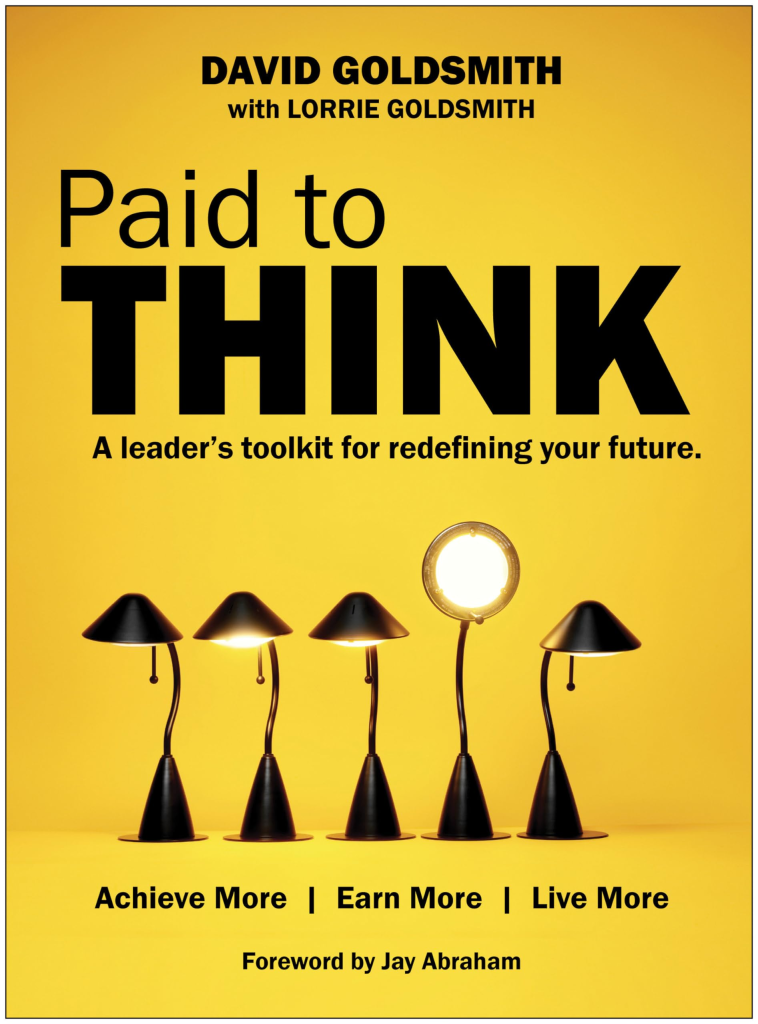
Paid to Think by David Goldsmith Book Summary
In “Paid to Think,” David Goldsmith presents a transformative approach to leadership that integrates strategic thinking, innovation, and collaboration. This book emphasizes the importance of thoughtful decision-making and challenges conventional wisdom, providing leaders with a universal framework to excel in today’s complex business landscape.
Who May Benefit from the Book
- Business leaders seeking a comprehensive leadership framework
- Managers looking to improve decision-making processes
- Entrepreneurs aiming for strategic innovation
- Professionals interested in enhancing their problem-solving skills
- Organizations striving to foster collaboration and alignment
- Students of business and management theories
- Anyone interested in developing effective leadership strategies
Top 3 Key Insights
- Enterprise Thinking: A holistic leadership approach that integrates strategizing, learning, performing, and forecasting to enhance organizational performance.
- The Economics of Thinking: Emphasizes the importance of strategic planning to minimize risks and maximize returns before taking action.
- Rethinking Leadership: Encourages leaders to challenge conventional assumptions, driving innovation and adaptability in a rapidly changing business environment.
7 More Lessons and Takeaways
- Developing Plans: Use the Cyclonic Strategic Thinking (CST) Model for effective strategy creation and priority management.
- New Product Development: Implement the ET Development Funnel for a systematic approach to innovation, ensuring thorough evaluation of ideas.
- Establishing Alliances: Leverage strategic partnerships to enhance organizational capabilities and reach desired outcomes faster.
- Leveraging Technology: Treat technology as a strategic tool for maximizing potential and addressing change.
- Prioritizing Activities: Allocate 60% of your day to planning high-value tasks to improve productivity.
- Execution Focus: Limit project management to two concurrent projects for optimal results and clarity.
- Continuous Learning: Adopt a mindset of questioning and reevaluation to remain competitive and innovative.
The Book in 1 Sentence
“Paid to Think” provides leaders with a holistic framework to enhance decision-making, strategic planning, and organizational innovation.
The Book Summary in 1 Minute
In “Paid to Think,” David Goldsmith argues that effective leadership requires a shift towards strategic thinking, prioritizing planning over impulsive action. The book introduces the Enterprise Thinking framework, encompassing strategizing, learning, performing, and forecasting. It emphasizes the importance of questioning assumptions, developing systematic approaches to innovation, and leveraging technology and alliances to foster organizational growth. By integrating these insights, leaders can make informed decisions that drive both personal and organizational success.
The Book Summary in 10 Minutes
Introduction to Enterprise Thinking
“Paid to Think” introduces the concept of Enterprise Thinking, which provides a comprehensive framework for leadership. This approach is designed to integrate various aspects of management, including strategizing, learning, performing, and forecasting. By adopting this holistic perspective, leaders can enhance communication, decision-making, and overall organizational effectiveness.
The Economics of Thinking
Goldsmith emphasizes the significance of strategic thinking, advocating for leaders to invest time in planning before taking action. This proactive approach minimizes risks and maximizes potential returns, allowing organizations to achieve desired outcomes more effectively.
Rethinking Leadership
The book challenges conventional leadership wisdom by encouraging leaders to constantly question their assumptions. Key areas for reevaluation include:
- The distinction between leadership and management
- The true value that leaders bring to organizations
- Approaches to change and innovation
- The impact of technology on success
Developing Effective Plans
The Cyclonic Strategic Thinking (CST) Model is introduced as a systematic method for strategic planning. This model involves five phases:
- Determine Desired Outcome: Clearly define what success looks like.
- Develop Strategy: Craft a strategic plan to achieve the outcome.
- Select Macro Tactics: Choose high-level actions to implement the strategy.
- Finalize Tactics: Detail specific tasks and responsibilities.
- Address Execution: Implement the plan while managing priorities.
New Product Development
Goldsmith presents the ET Development Funnel as a structured process for innovation. This funnel consists of three main activities:
- Ideation: Generate a broad range of ideas.
- Elimination: Filter these ideas through specific criteria to find the best options.
- Development: Transform selected ideas into viable products or services.
Establishing Strategic Alliances
The book outlines the importance of leveraging partnerships to enhance organizational capabilities. Understanding the different forms of alliances and aligning them with strategic goals can lead to faster achievement of desired outcomes.
Leveraging Technology
Goldsmith asserts that technology should be viewed as a strategic tool for maximizing potential. Leaders should consider both the human aspect of technology adoption and the broader implications for organizational growth.
Conclusion
By synthesizing these concepts, “Paid to Think” equips leaders with the insights and tools needed to navigate today’s dynamic business landscape. This comprehensive approach encourages continuous learning, innovation, and strategic alignment, fostering a culture of excellence within organizations.
About the Author
David Goldsmith is an accomplished author and business expert specializing in enterprise thinking and leadership strategies. His insights stem from extensive experience in consulting and business education, offering practical frameworks for effective management. Goldsmith’s writing emphasizes depth and applicability, aiming to empower leaders to thrive in complex business environments.
How to Get the Best of the Book
To maximize the benefits of “Paid to Think,” actively engage with the framework presented by applying its principles to your own leadership challenges and encourage discussions around its insights with your team.
Conclusion
“Paid to Think” offers invaluable insights into effective leadership, strategic planning, and innovation. By embracing the principles outlined in this book, leaders can transform their organizations, drive meaningful change, and enhance their decision-making capabilities.