
What is the Informal Reading Level Assessment?
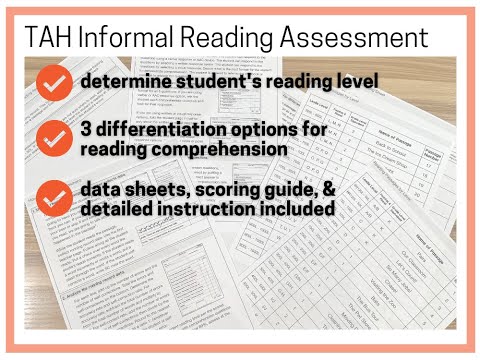
The Informal Reading Level Assessment is a diagnostic tool to determine a student’s reading level. It assesses reading fluency, comprehension, and decoding skills.
This assessment is valuable for educators to tailor instruction to meet the individual needs of each student, identifying areas that require improvement and areas of strength. The Informal Reading Level Assessment provides a comprehensive overview of a student’s reading abilities, enabling teachers to develop targeted strategies to support their progress.
By assessing a student’s reading level, educators can ensure that the appropriate resources and materials are provided to help them achieve success in their reading development journey. Understanding a student’s reading level is crucial for effective and personalized literacy instruction, guiding educators in fostering a love for reading and enhancing overall academic achievement.
Credit: shop.theautismhelper.com
Why Is Informal Reading Level Assessment Important?
Why is Informal Reading Level Assessment Important?
Components Of Informal Reading Level Assessment
When assessing a student’s reading level, an Informal Reading Level Assessment (IRLA) is a valuable tool that provides educators with insight into the reading abilities of their students. The IRLA measures various components of a student’s reading skills, including reading fluency, comprehension, and vocabulary. Understanding the components of the Informal Reading Level Assessment can aid educators in tailoring their instruction to meet the specific needs of each student.
Reading Fluency
The first component of the Informal Reading Level Assessment is reading fluency. This assessment evaluates a student’s ability to read with accuracy, appropriate pace, and natural expression. Fluency is a critical aspect of proficient reading as it directly impacts comprehension.
Comprehension
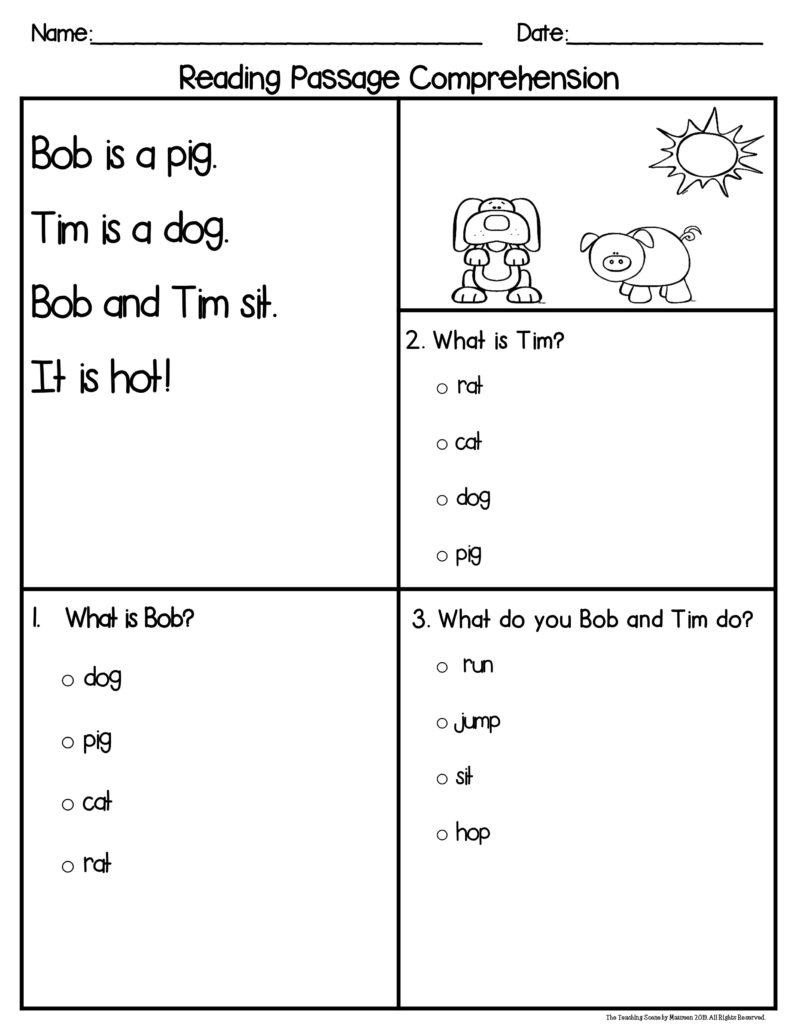
Comprehension is another essential component of the Informal Reading Level Assessment. This assessment measures a student’s ability to understand and interpret the meaning of the text they are reading. It encompasses both literal and inferential comprehension skills, which are fundamental for effective reading.
Vocabulary
The vocabulary component of the Informal Reading Level Assessment evaluates a student’s knowledge and understanding of words. A broad vocabulary is crucial for reading comprehension as it allows students to comprehend more complex texts and make connections between words and their meanings.
How To Administer An Informal Reading Level Assessment
Welcome to another informative blog post on understanding the Informal Reading Level Assessment. In this section, we will guide you through the process of administering this assessment. By following these steps and implementing best practices, you can ensure accurate and effective results that will help you identify a student’s reading abilities. Let’s dive right in!
Selecting Appropriate Materials
The first step in administering an Informal Reading Level Assessment is selecting appropriate materials for the assessment. It is crucial to choose reading passages that are suitable for the student’s current reading level. This will ensure that the assessment accurately reflects their abilities and provides useful insights.
When selecting materials, consider the following:
- The complexity of the text: Choose passages that align with the student’s reading skills and challenge them without overwhelming them.
- The relevance of the content: Opt for passages that align with the student’s interests, as it can boost engagement and motivation.
- The appropriateness of the vocabulary: Ensure that the vocabulary used in the selected passages is appropriate for the student’s reading level.
By carefully selecting materials, you can create a fair and accurate assessment environment that will yield meaningful results.
Setting Up The Assessment Environment
The next step in administering an Informal Reading Level Assessment is to create an optimal assessment environment. An environment that is conducive to focused reading will help the student perform to the best of their abilities. Here are some key considerations:
- Minimize distractions: Choose a quiet location free from distractions such as noise, clutter, or other students.
- Comfortable seating: Ensure that the student is seated comfortably, with proper lighting and a suitable reading surface.
- Ample time: Set aside sufficient time for the assessment to allow the student to read at their normal pace without feeling rushed.
A well-organized and distraction-free environment will aid in accurate assessment results.
Giving Clear Instructions
In the final step of administering an Informal Reading Level Assessment, it is crucial to provide clear instructions to the student. Clear instructions will help them understand the purpose of the assessment and what is expected of them. Here are some tips for giving clear instructions:
- Explain the purpose: Begin by explaining to the student why they are taking the assessment and emphasize that it is not a test of their abilities but rather a tool to help their reading development.
- Describe the task: Clearly explain what the student needs to do, such as reading the passage silently or aloud and answering comprehension questions.
- Clarify expectations: Let the student know that they can ask for help if they encounter difficulties and that the assessment is not timed.
By providing clear instructions, you can create a supportive and stress-free environment that promotes the student’s reading fluency.
Interpreting The Results Of An Informal Reading Level Assessment
Once an Informal Reading Level Assessment has been conducted, it is important to carefully interpret and analyze the results. This will provide educators with valuable insights into students’ reading abilities, allowing them to make informed decisions and tailor instruction to meet individual needs. By understanding how to determine the reading level and identify strengths and weaknesses, educators can effectively support students in their reading journey.
Determining The Reading Level
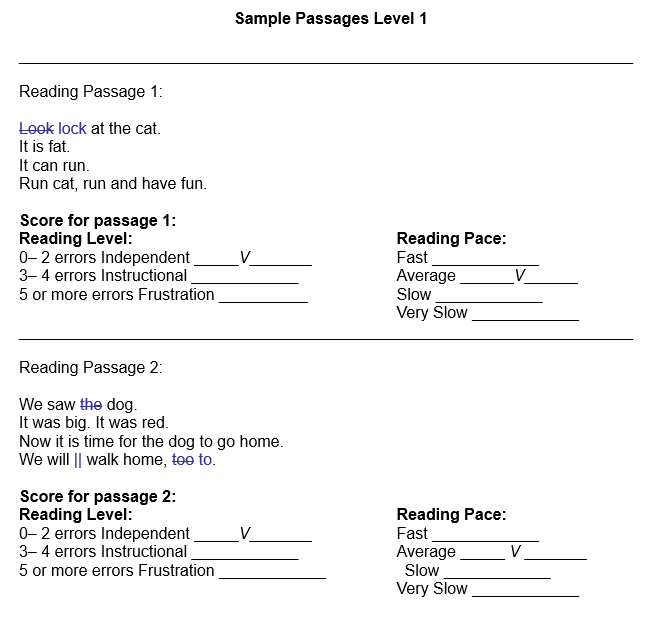
One of the key aspects of interpreting the results of an Informal Reading Level Assessment is determining the reading level of the student. This involves considering various factors such as accuracy, fluency, and comprehension. Accuracy refers to the student’s ability to correctly read words and decode unfamiliar ones, while fluency measures how smoothly and effortlessly they read. Comprehension, on the other hand, evaluates the student’s understanding of the text.
To determine the reading level, educators often use a rubric or a reading level chart that outlines the characteristics of different reading levels. This allows for a consistent and standardized evaluation process. By analyzing the student’s performance in these areas, educators can assign a reading level that aligns with their abilities. This information serves as a starting point for providing appropriate instruction and selecting suitable reading materials.
Identifying Strengths And Weaknesses
Another crucial aspect of interpreting the results of an Informal Reading Level Assessment is identifying the student’s strengths and weaknesses. This information provides valuable insights into areas where they excel and areas that require further attention and support.
One way to identify strengths and weaknesses is by analyzing the accuracy and fluency of the student’s reading. Are they struggling with specific phonics rules or sight words? Do they pause frequently or stumble over certain words? Answering these questions helps pinpoint areas that need improvement.
Furthermore, comprehending the text is an essential aspect of reading. By assessing the student’s ability to understand and interpret what they’ve read, educators can identify any comprehension difficulties. This may involve analyzing their ability to recall key details, make inferences, draw conclusions, or summarize the text.
A common approach to identifying strengths and weaknesses is using a checklist or a rubric that outlines different reading skills. This allows educators to systematically assess the student’s performance in various areas and create targeted interventions to address any weaknesses.
In conclusion, interpreting the results of an Informal Reading Level Assessment involves determining the reading level through an evaluation of accuracy, fluency, and comprehension. Additionally, identifying strengths and weaknesses allows educators to tailor instruction and support to each student’s needs. By utilizing appropriate assessment tools and considering multiple factors, educators can effectively guide students on their reading journey.
Benefits And Limitations Of Informal Reading Level Assessment
Understanding a student’s reading level is crucial for educators to plan appropriate instruction and interventions. One method widely used in schools is the Informal Reading Level Assessment (IRLA). This assessment evaluates a student’s reading abilities by examining their performance in various reading tasks. While IRLA offers several benefits, it also has certain limitations that need to be considered. Let’s explore these aspects in more detail.
Personalized Instruction
One of the significant advantages of using the Informal Reading Level Assessment is the opportunity for personalized instruction. By accurately determining a student’s reading level, teachers can tailor their lessons to their individual needs. This personalized approach allows educators to focus on specific skills and areas that require improvement, optimizing the learning experience for the student. By providing targeted instruction based on their reading level, students can make progress at their own pace, fostering a sense of achievement and motivation.
Identifying Intervention Needs
Another valuable benefit of the Informal Reading Level Assessment is its ability to identify intervention needs. By assessing a student’s reading level, educators can quickly identify if a student is performing significantly below grade level expectations. This early identification helps initiate appropriate interventions, such as additional support, specialized tutoring, or targeted intervention programs. The IRLA assists educators in identifying struggling readers and ensuring they receive the necessary assistance to bridge any skill gaps and progress academically.
Limitations And Considerations
Although the Informal Reading Level Assessment offers numerous benefits, it is essential to be aware of its limitations and considerations. First, while the IRLA provides valuable insights into a student’s reading abilities, it does not provide a comprehensive analysis of their overall literacy skills. Therefore, educators should supplement the assessment with other measures to gain a holistic understanding of a student’s literacy proficiency. Additionally, the IRLA is not a one-time assessment but should be carried out periodically to monitor a student’s progress and adapt instruction accordingly. Lastly, it’s crucial to consider individual factors and cultural biases that may impact a student’s performance on the assessment, ensuring fairness and equity in the evaluation process.
Credit: theteachingscene.com
Credit: ivypanda.com
Frequently Asked Questions On What Is The Informal Reading Level Assessment?
What Is An Informal Assessment Example?
An example of an informal assessment is observing a student’s participation in class discussions.
What Are The 4 Levels Of An Informal Reading Inventory?
The four levels of an informal reading inventory are independent, instructional, frustration, and listening.
What Is The Difference Between A Qri And An Iri?
A QRI is a qualified resource identifier, while an IRI is an internationalized resource identifier. The main difference lies in the scope and purpose of each identifier. QRIs are specific to certain contexts, while IRIs are designed for global use, accommodating a wider range of characters and languages.
Conclusion
To sum up, the Informal Reading Level Assessment (IRLA) is a valuable tool for measuring and monitoring students’ reading progress. By providing a comprehensive view of their reading abilities, it enables educators to tailor instruction and support to meet individual needs.
With its user-friendly format and reliable results, the IRLA empowers teachers to make data-driven decisions, ultimately fostering student growth and success in literacy. Implementing this assessment can greatly enhance the educational experience for both students and educators alike.

