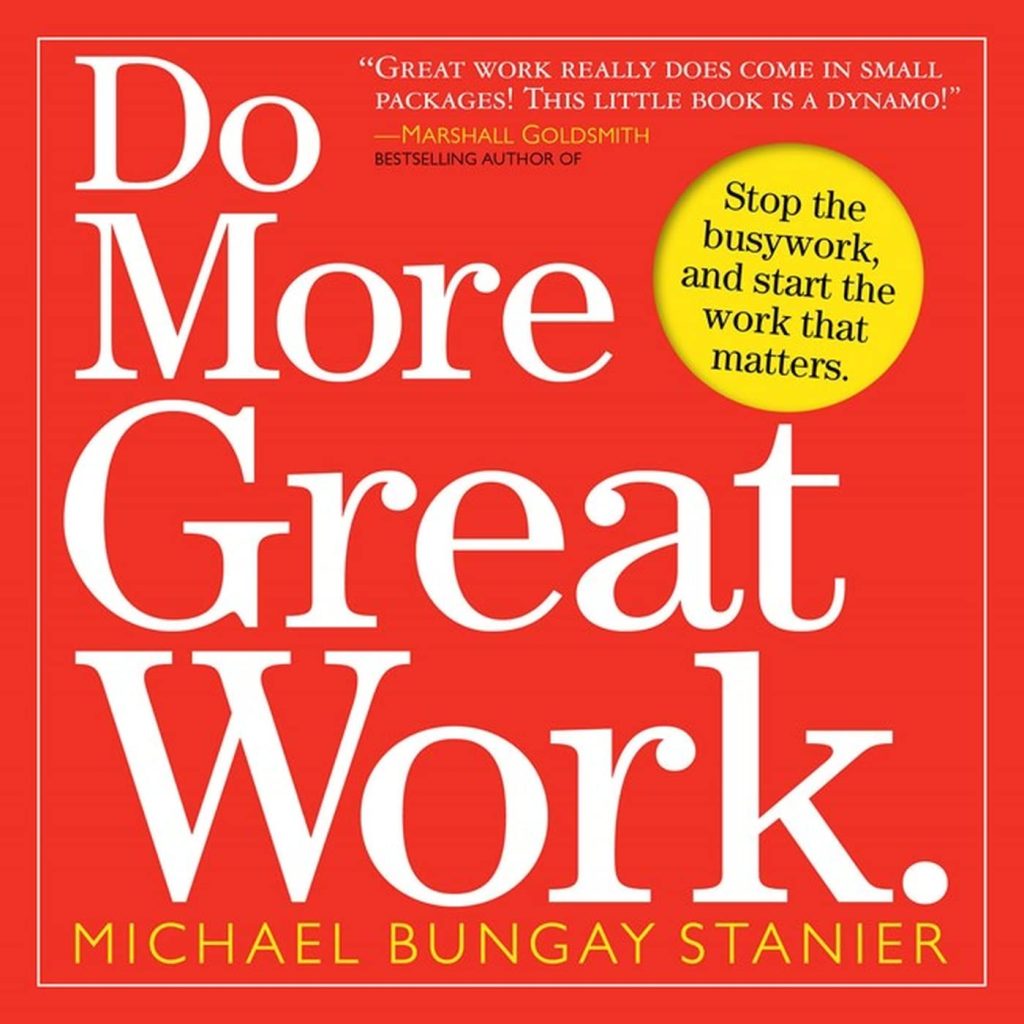
Do More Great Work by Michael Bungay Stanier
“Do More Great Work” by Michael Bungay Stanier is a practical guide designed to help readers discover and pursue meaningful, impactful projects in their work and personal lives. Stanier distinguishes between “Bad Work,” “Good Work,” and “Great Work,” providing actionable insights and exercises for shifting focus toward endeavors that inspire and fulfill. Through tools like “maps” and reflective exercises, the book encourages readers to align their work with their values and long-term goals.
Who May Benefit from the Book
- Professionals seeking purpose and fulfillment in their careers
- Managers and leaders aiming to foster meaningful work in their teams
- Individuals in career transitions looking to redefine their goals
- Entrepreneurs wanting to make an impact through their ventures
- Personal development enthusiasts exploring ways to find deeper meaning in daily tasks
Top 3 Key Insights
- Identify Your Great Work: Understand the difference between “Bad Work,” “Good Work,” and “Great Work” to refocus your efforts.
- Uncover Great Work Opportunities: Reflect on past peak moments to identify themes that reveal potential Great Work.
- Define and Embody Your Best Self: Clarify your optimal traits to consistently align with projects that reflect your best self.
7 More Lessons and Takeaways
- Scan for Opportunities: Regularly assess your environment to discover areas where you can make a significant impact.
- Address What’s Broken: Find motivation and purpose by tackling challenges in your work and life that need fixing.
- Balance Work Demands with Personal Goals: Navigate organizational and personal aspirations to carve out time for Great Work.
- Generate Creative Ideas: Use divergent thinking to uncover unconventional paths toward meaningful projects.
- Choose Projects Wisely: Evaluate potential projects based on impact and alignment with your values before committing.
- Commit to Action: Break down projects into actionable steps to make steady progress toward your Great Work.
- Build a Support Network: Cultivate a network of individuals who provide emotional, technical, and strategic support.
The Book in 1 Sentence
“Do More Great Work” empowers readers to discover and pursue impactful projects that align with their values, creating a fulfilling and meaningful professional life.
The Book Summary in 1 Minute
Michael Bungay Stanier’s “Do More Great Work” offers a guide to finding and executing meaningful, high-impact projects. By distinguishing “Great Work” from “Bad Work” and “Good Work,” readers learn to prioritize tasks that matter most. The book encourages self-reflection on peak moments and presents practical strategies for uncovering and committing to Great Work. From scanning for opportunities to building a supportive network, Stanier provides clear steps to align work with personal values and goals, enabling readers to thrive professionally and personally.
The Book Summary in 10 Minutes
Understanding the Concept of Great Work
Stanier categorizes work into three types:
- Bad Work: Pointless, repetitive tasks that drain energy and add little value.
- Good Work: Necessary tasks that maintain stability and productivity but lack significant impact.
- Great Work: Meaningful, impactful work that inspires, challenges, and stretches an individual.
By identifying and pursuing Great Work, readers can focus on what brings them true fulfillment.
Identifying Your Great Work
1. Reflecting on Peak Moments
Stanier emphasizes using personal peak experiences as indicators of potential Great Work. To do this:
- Reflect on 3-4 peak moments from work and 1-2 from personal life.
- Identify patterns, skills, and themes in these moments that resonate deeply.
- Use these reflections as a guide for future Great Work opportunities.
2. Recognizing Your Best Self
Creating a list of personal strengths and positive qualities helps define what Great Work looks like. Stanier suggests:
- Listing your best traits and their opposites to stay aware of areas for improvement.
- Identifying role models who embody these positive traits to gain inspiration.
- Using this self-awareness to gravitate towards projects aligned with your optimal self.
Searching for Great Work Opportunities
1. Scanning the Environment
Stanier encourages readers to keep an open mind by exploring potential Great Work areas, such as:
- Personal Interests: Hobbies, community involvement, or relationships.
- Professional Development: Skill-building and knowledge expansion.
- Organizational Needs: Addressing gaps and inefficiencies within a team.
- Industry Trends: Exploring new technologies or market shifts.
- Global Issues: Considering broader challenges like sustainability or social justice.
2. Tackling Problems to Find Great Work
Finding Great Work often involves addressing things that need fixing. Stanier advises:
- Listing inefficiencies and irritations in daily tasks.
- Addressing problems within the organization that align with personal skills.
- Assessing issues that would make a difference if solved, focusing on those you’re passionate about.
Balancing Personal and Organizational Goals
Stanier underscores the importance of balancing personal Great Work aspirations with the expectations of one’s organization. To achieve this balance:
- Map out work responsibilities to identify overlap between personal and organizational priorities.
- Suggest projects that fulfill both professional goals and personal interests.
- Seek ways to integrate elements of Great Work into existing tasks for greater satisfaction.
Generating Creative Ideas
Creativity plays a crucial role in identifying Great Work. Stanier suggests:
- Using provocative questions to challenge conventional thinking.
- Setting an idea quota and time limit to push beyond surface-level ideas.
- Drawing inspiration from unrelated fields or industries to expand your perspective.
Choosing and Committing to Great Work Projects
To select a Great Work project:
- List several potential projects, then develop criteria (impact, feasibility, personal passion) to assess each option.
- Choose the project that best aligns with both personal values and practical feasibility.
- Commit fully to the project, embracing it as a meaningful pursuit.
Taking Action and Building Support
Stanier emphasizes breaking down Great Work projects into manageable steps. His suggestions include:
- Defining a specific, actionable first step.
- Setting deadlines and sharing your plan with someone supportive to stay accountable.
- Regularly reviewing and adjusting your approach to maintain momentum.
Building a support network is crucial for sustaining progress on Great Work. Types of support Stanier highlights include:
- Emotional Support: Friends and family for motivation.
- Technical Support: Colleagues or experts who can share skills or knowledge.
- Strategic Support: Mentors who offer guidance and open doors.
About the Author
Michael Bungay Stanier is an influential author and coach known for his book “The Coaching Habit,” a bestseller with nearly a million copies sold. Named Canadian Coach of the Year in 2006, Stanier has extensive experience in helping professionals unlock their potential. His work blends practical exercises with insights from various experts, aiming to help readers discover purpose and meaning in their work. Stanier also hosts the podcast “2 Pages with MBS,” where notable guests share and discuss passages from impactful books.
How to Get the Best of the Book
To make the most of this book, engage fully with each exercise and self-reflection activity. The maps and tools provided are designed for practical application, so readers will gain the most by actively participating rather than passively reading.
Conclusion
“Do More Great Work” provides an inspiring and practical roadmap for anyone seeking to make a meaningful impact. By encouraging readers to distinguish between routine tasks and truly significant work, Stanier’s insights enable readers to lead more fulfilling, purpose-driven lives. With actionable exercises, the book is a valuable resource for redefining one’s approach to work.