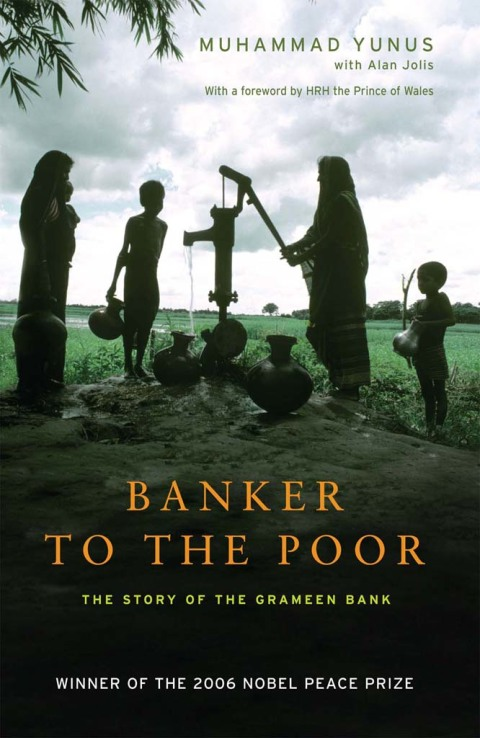
Banker to the Poor by Muhammad Yunus
In this episode of SummaryPedia, we explore Banker to the Poor: Micro-Lending and the Battle Against World Poverty by Muhammad Yunus. This book offers an inspiring account of how micro-credit transformed the lives of impoverished individuals, especially women, empowering them to escape poverty. Yunus details his journey in establishing Grameen Bank, challenging traditional banking norms, and pioneering micro-credit to uplift society’s most vulnerable.
Who May Benefit from the Book
- Aspiring social entrepreneurs interested in business solutions for social problems.
- Students of economics and development studies seeking practical models for poverty alleviation.
- Non-profit leaders aiming to address poverty in innovative ways.
- Banking professionals looking to understand alternative credit models.
- Policy makers and activists focused on sustainable development.
Top 3 Key Insights
- Micro-Credit’s Impact: Micro-credit can be a transformative force, lifting people out of poverty through self-sufficiency.
- Empowering Women: Lending to women provides ripple effects, uplifting entire communities.
- Innovative Banking Model: Grameen Bank defied traditional norms by eliminating collateral and trusting borrowers.
7 More Lessons and Takeaways
- Breaking Poverty’s Chains: Small loans without collateral enable impoverished people to build sustainable businesses.
- Group Lending as Social Support: Borrowers form groups, creating accountability and fostering community bonds.
- Adaptability to Local Culture: Grameen Bank worked within Bangladeshi cultural and religious contexts to gain acceptance.
- Beyond Credit: Programs on health, education, and renewable energy address various aspects of poverty.
- Global Influence: The Grameen model’s success inspired micro-financing initiatives worldwide.
- Focus on Self-Employment: Encouraging self-employment boosts income stability and personal independence.
- Rethinking Economics: Yunus proposes a people-centered economy that values social impact alongside profit.
The Book in 1 Sentence
Muhammad Yunus demonstrates how micro-lending and trust in the poor can break poverty cycles, redefine banking, and create sustainable development.
The Book Summary in 1 Minute
Banker to the Poor reveals how Muhammad Yunus’s revolutionary concept of micro-credit has empowered impoverished individuals to lift themselves from poverty. Grameen Bank challenges traditional banking by offering small loans without collateral to those in poverty, especially women, enabling them to generate income and build self-reliance. Yunus’s work underscores that with the right support, even society’s poorest can be successful entrepreneurs. His model emphasizes self-employment, group lending, and focusing on women as primary borrowers, showing how micro-credit fosters sustainable development. This approach has inspired global replications, impacting millions and redefining the role of banks in social change.
The Book Summary in 10 Minutes
Understanding Micro-Credit and Its Power
Micro-credit, the practice of offering small loans to financially underserved populations, revolutionizes poverty reduction by enabling recipients to launch small businesses, support families, and break free from dependency. Muhammad Yunus saw that traditional banks ignored the poor, assuming them unworthy of credit. By creating a micro-credit model through Grameen Bank, Yunus proved that the poor could repay loans reliably and use credit to uplift their lives.
Breaking Barriers with Grameen Bank
A New Kind of Bank
Yunus established Grameen Bank in Bangladesh, an institution that prioritizes social impact over profits. Unlike traditional banks that demand collateral, Grameen’s approach trusts borrowers, offers fair terms, and focuses on the poorest, especially women. These efforts helped thousands avoid exploitative loan practices and sparked global micro-finance interest.
The Role of Women in Sustainable Development
Yunus observed that lending to women led to better family outcomes. Women borrowers invested in their families, resulting in a multiplier effect that extended economic benefits to the entire community. Grameen Bank’s strategy to empower women through credit disrupted conventional gender roles, providing them with financial independence and social recognition.
A Unique Approach: Group Lending and Peer Support
To ensure accountability and support, Grameen Bank introduced a group lending system where borrowers formed small, trust-based groups. Each member is responsible not only for their loan but for the group’s collective success. Regular group meetings create a support network that ensures loan repayment and fosters a sense of community. The social pressure to repay is strong, resulting in Grameen’s high repayment rates.
Grameen’s Expanded Impact Beyond Credit
Addressing Root Causes of Poverty
Understanding that poverty isn’t solely about lack of capital, Grameen Bank implemented diverse programs, such as educational opportunities for borrowers’ children, health insurance, housing support, and renewable energy initiatives. Each program tackled poverty from multiple angles, providing holistic support to create long-term, stable improvement in borrowers’ lives.
Cultural Sensitivity in Implementation
Implementing micro-credit in rural, conservative Bangladeshi communities required cultural awareness. By respecting religious and cultural norms, Grameen Bank built trust among borrowers and local leaders, helping overcome skepticism toward women borrowers and facilitating acceptance of economic programs.
The Global Spread of the Grameen Model
Replication and Adaptation Worldwide
Grameen’s success encouraged other countries to adopt micro-credit programs, tailored to local cultures. The Grameen Trust aids global replication, and collaborations with governments and international organizations extend its reach. Micro-credit’s effectiveness is evident in diverse regions, from African villages to urban centers in developed countries, demonstrating its universal relevance.
Technology and Rural Development
Grameen Bank embraced technology to bring resources to rural areas, launching GrameenPhone and Grameen Shakti. These projects introduced cellular technology and renewable energy to underserved populations, providing access to information, communication, and power. This leapfrogging effect allows rural communities to harness modern tools without experiencing prior developmental phases.
Embracing Self-Employment as an Anti-Poverty Strategy
Grameen Bank’s emphasis on self-employment provides borrowers with income flexibility and independence. By fostering self-reliance, Grameen enables individuals to build stable livelihoods and generate wealth. This model promotes dignity and empowerment, encouraging borrowers to develop innovative solutions and participate actively in the economy.
Rethinking Traditional Economics
A People-Centered Economic Vision
Yunus advocates for a socially conscious economy that values people over profits. He challenges the notion that economic success must exclude the poor. Through Grameen’s work, Yunus shows that social entrepreneurship can drive development, inspiring economists and policymakers to design inclusive economic models prioritizing human potential.
About the Author
Muhammad Yunus
Muhammad Yunus is a Bangladeshi economist celebrated for pioneering micro-credit and founding Grameen Bank. His innovative model of lending small amounts to the impoverished, especially women, garnered global recognition, including the 2006 Nobel Peace Prize. Yunus is a distinguished professor and social entrepreneur whose work redefined poverty alleviation through economic empowerment. As a Global Elders founding member, Yunus uses his influence to tackle pressing global issues like poverty, climate change, and social injustice.
How to Get the Best of the Book
To maximize value from Banker to the Poor, read with an open mind about innovative financial solutions and note the Grameen model’s adaptability. Reflect on how micro-credit’s principles could apply in your community or field to foster change and empower marginalized groups.
Conclusion
Banker to the Poor by Muhammad Yunus illustrates the life-changing potential of micro-credit, underscoring that everyone deserves a chance at financial independence. Yunus’s story of transforming the lives of the impoverished through trust and credit is inspiring, urging us to imagine a world where economics drives positive social change.
Other books by Nobel laureate Muhammad Yunus you may read: