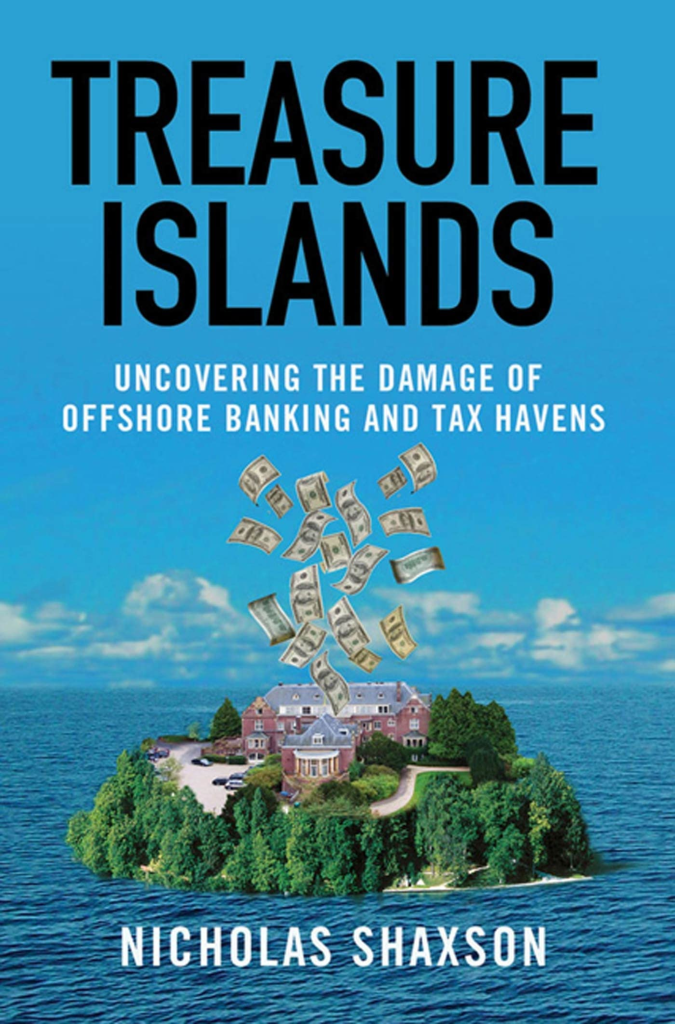
Treasure Islands by Nicholas Shaxson
In this episode of SummaryPedia, we delve into Treasure Islands by Nicholas Shaxson. This groundbreaking work explores the world of offshore finance and tax havens, revealing how they allow the wealthy to bypass taxes, regulations, and accountability. Shaxson’s meticulous research sheds light on the hidden forces shaping the global economy, impacting both wealthy and developing nations.
Who May Benefit from the Book
- Economists and finance professionals seeking insights into global financial systems.
- Policymakers aiming to understand offshore finance’s impact on national economies.
- Tax professionals interested in the mechanisms behind tax havens.
- Social activists concerned about economic inequality and global wealth distribution.
- Business leaders and investors curious about the role of tax strategies in wealth accumulation.
- Academics studying globalization, economics, and finance.
- General readers interested in the hidden aspects of modern finance and wealth.
Top 3 Key Insights
- The Offshore Network: Offshore finance is a vast, shadow system with tax havens worldwide, facilitating tax avoidance and secrecy.
- Historical Evolution: The offshore system developed from colonial powers, particularly Britain, leveraging former colonies as tax havens.
- The City of London’s Role: The City of London is a central hub for offshore finance, influencing global flows and secrecy practices.
7 More Lessons and Takeaways
- Tax Havens’ Impact on Developing Countries: Offshore systems siphon wealth from developing countries, worsening poverty by facilitating tax evasion.
- Corporate Tax Avoidance: Multinational corporations use offshore structures to lower tax burdens, shifting costs to other countries and widening inequality.
- Human Cost of Secrecy: Offshore culture fosters secrecy and complicity, often impacting local communities and economies negatively.
- U.S. and Offshore Finance: While the U.S. suffers from tax evasion, it also acts as a tax haven, offering financial secrecy to foreign investors.
- 2008 Financial Crisis Catalyst: Offshore finance contributed to the global financial crisis by enabling risky, opaque financial practices.
- Global Resistance: Activists and civil society groups are challenging the offshore system, advocating for transparency and tax justice.
- Need for Cultural Shift: Reclaiming financial ethics and valuing transparency over secrecy are essential to counteract the effects of offshore finance.
The Book in 1 Sentence
Treasure Islands reveals how offshore finance reshapes global wealth dynamics, enabling elite tax evasion and perpetuating economic injustice.
The Book Summary in 1 Minute
Treasure Islands unveils the vast network of tax havens that allow the wealthy to avoid taxes and regulations, affecting economies worldwide. Shaxson traces the roots of offshore finance to colonial powers, notably Britain, and explains the role of the City of London as a central player. He highlights how tax havens harm developing countries, fuel inequality, and contributed to the 2008 financial crisis. The book advocates for transparency and reform, calling for a cultural shift towards ethical financial practices and accountability. Shaxson emphasizes the social and economic impacts of unaccountable wealth and secrecy on global finance.
The Book Summary in 10 Minutes
Origins of Offshore Finance
Offshore finance has roots in colonial history, as European powers like Britain used former colonies as tax havens, retaining economic influence even after political control ended. Early practices in Swiss banks and Caribbean tax havens in the 20th century laid the groundwork for today’s offshore system. Shaxson explains how the Euromarket’s creation in 1950s London sparked the growth of a financial system independent of national regulation.
The City of London: Global Hub of Offshore Finance
The City of London operates as a quasi-independent entity, governed by centuries-old laws and privileges that exempt it from British regulatory oversight. This autonomy makes it the core of the offshore network, connecting a web of British Overseas Territories and Crown Dependencies like Jersey and the Cayman Islands. These territories, along with former colonies like Hong Kong and Singapore, facilitate tax avoidance and financial secrecy for wealthy clients worldwide.
Key Components of Offshore Finance
| Component | Function |
|---|---|
| Tax Havens | Offer low or zero tax rates to attract wealth. |
| Secrecy Laws | Protect financial transactions from public scrutiny. |
| Shell Companies | Provide anonymous ownership, often layered for secrecy. |
| Professional Enablers | Lawyers, accountants, and bankers facilitate transactions. |
Impact on Global Economy
Offshore finance erodes tax bases globally, particularly affecting both developed and developing nations. By allowing wealth to flow unreported, these jurisdictions cause significant loss of tax revenue needed for public services. This system disproportionately burdens low-income countries, depriving them of crucial funds that could support infrastructure, healthcare, and education. Shaxson estimates that developing nations lose more to illicit financial flows than they receive in foreign aid.
Corporate Tax Avoidance Strategies
Multinational corporations often manipulate tax laws to shift profits to low-tax jurisdictions and costs to high-tax countries, reducing their tax liabilities. Techniques include transfer pricing (manipulating internal prices), intellectual property holdings in tax havens, and debt shifting. Such strategies exacerbate economic inequality by benefiting large corporations over smaller, domestic businesses.
Role in the 2008 Financial Crisis
Shaxson argues that offshore finance played a significant role in the 2008 crisis by enabling risky financial practices. Offshore jurisdictions allowed banks to engage in excessive leverage and develop complex financial instruments away from regulatory oversight. Examples include AIG’s London-based Financial Products unit and Lehman Brothers’ use of offshore accounting, which contributed to global financial instability.
U.S. Position in Offshore Finance
While the U.S. loses billions annually to offshore tax evasion, certain states like Delaware, Nevada, and Wyoming provide similar secrecy to foreign clients. Additionally, the U.S. financial system attracts offshore clients looking to invest anonymously and tax-free, positioning America as both a victim and a perpetrator of offshore finance.
Resistance and Reforms
Civil society organizations, including the Tax Justice Network, are pushing for reforms in global finance, promoting policies like country-by-country reporting, automatic information exchange, and anti-money laundering regulations. Despite some progress, the powerful financial industry’s influence and competition between tax havens hinder reform efforts.
Cultural Change: Rethinking Wealth and Transparency
Shaxson advocates for a fundamental cultural shift, where tax compliance and financial transparency become societal values. Acknowledging tax as a civic duty and valuing public goods over unchecked private wealth accumulation are key steps in addressing offshore finance’s negative impact.
About the Author
Nicholas Shaxson is a journalist and author with expertise in global finance and tax havens. Born in Malawi, Shaxson has lived across continents, including Africa, Asia, and Europe. His work has appeared in The Economist, Reuters, and Foreign Affairs. Shaxson’s experiences in diverse global settings inform his writing, giving him a unique perspective on economic inequality and offshore finance’s far-reaching impacts. Currently residing in Zürich, Switzerland, he continues to contribute to international financial discussions.
How to Get the Best of the Book
To maximize the insights from Treasure Islands, approach it with an open mind about the global financial system. Consider taking notes on specific countries and practices, as Shaxson’s research may shift your perspective on how the financial elite and corporate structures operate.
Conclusion
Treasure Islands provides a compelling exposé of the offshore finance world, shedding light on its economic and social consequences. Shaxson’s revelations highlight the need for greater transparency and accountability in global finance. This book is essential for understanding the unseen mechanisms that drive inequality, challenging readers to consider their role in advocating for financial reform.