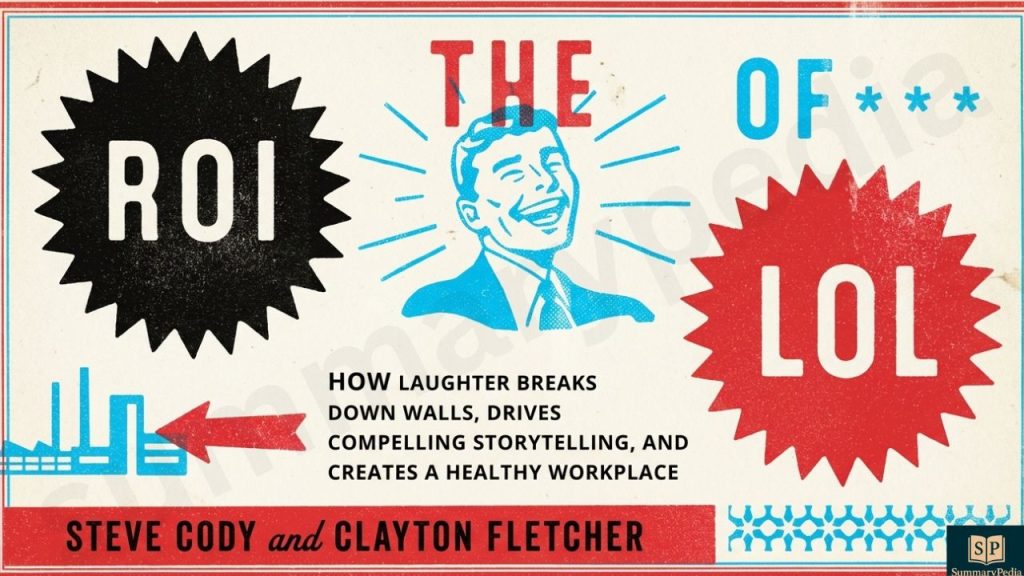
The ROI of LOL: How Laughter Breaks Down Walls, Drives Compelling Storytelling, and Creates a Healthy Workplace by Steve Cody and Clayton Fletcher
In a world defined by uncertainty and the rise of artificial intelligence, the human touch of humor has become a strategic business necessity. “The ROI of LOL” by Steve Cody and Clayton Fletcher reveals how laughter breaks down barriers, humanizes leaders, and drives financial results. This book matters today because culture—rooted in shared joy—remains the ultimate competitive advantage for attracting and retaining the best talent.
Who May Benefit
- C-Suite Executives looking to build trust and high-performance cultures.
- HR Professionals seeking modern, effective employee engagement and retention strategies.
- Sales & Marketing Teams wanting to differentiate their brand and craft viral storytelling.
- Managers transitioning to hybrid/remote environments who need to maintain team connectivity.
- Anyone wanting to improve their public speaking, active listening, and presentation skills.
Top 3 Key Insights
- Laughter builds the TOAST framework (Trust, Openness, Authenticity, Storytelling, Teamwork), the foundation for any healthy, high-performing workplace culture that wants to attract and retain top talent.
- Vulnerability is a strategic leadership strength, not a weakness; admitting imperfections and sharing authentic feelings fosters deep loyalty and trust among employees, clients, and all other stakeholder audiences.
- Comedians are master communicators who can teach businesspeople how to listen actively, read a room, and craft compelling narratives that break through the noise of a distracted world.
4 More Takeaways
- The “Yes, and…” rule of improvisation eliminates creative tug-of-war, enabling teams to build on ideas and reach innovative solutions faster than traditional brainstorming.
- Active listening requires hearing with the whole body—tuning into emotions—to understand needs and adapt your message in real-time during sales or crises.
- Self-deprecating humor is an absolute godsend for disarming adversarial audiences or defusing tense meetings, signaling that a leader is human and approachable.
- Embracing failure as a stepping stone—the “bombing” process—allows for experimentation and growth, creating a climate where true breakthroughs and organizational resilience are possible.
Book in 1 Sentence
“The ROI of LOL” proves that integrating professional comedy skills into business culture drives authentic storytelling, strengthens leadership bonds, and delivers measurable bottom-line results.
Book in 1 Minute
Steve Cody and Clayton Fletcher argue that humor is a “secret weapon” for modern business, offering more than just quick laughs—it provides a long-term “nutrition plan” for organizational health. By mastering techniques from stand-up, improv, and sketch comedy, leaders can transition from autocratic “kings” to authentic, relatable figures who foster a “TOAST” culture. The book illustrates how laughter releases neurochemicals like oxytocin that bond teams, even in remote settings. Ultimately, humor acts as a strategic differentiator, enabling brands to connect deeply with stakeholders, survive crises, and outflank the competition with “kinetic goodwill.”
1 Unique Aspect
The authors introduce “TOAST” (Trust, Openness, Authenticity, Storytelling, Teamwork), a proprietary framework for organizational health that transforms comedy skills into practical business metrics. This uniquely fuses the rigor of a corporate CEO with the creative risks of a professional comedian.
Chapter 1: The Need for Laughter in an Uncertain World
“Culture trumps innovation, strategy, creativity, and everything else.”
Laughter is not a quick fix but a long-term investment in becoming an “employer of choice.” In a post-2020 landscape, employees care about more than profits; they crave connection. While AI can generate text, it cannot “read a room” or sense a client’s hesitation; these are human advantages enhanced by humor. The chapter emphasizes that “happy employees are the bottom line,” citing M&T Bank as a prime example of empathetic leadership driving success.
Chapter Key Points:
- Culture is the primary disruptor.
- Humor is a human-only advantage.
- Long-term ROI over quick fixes.
Chapter 2: Peppercomm’s History with Comedy Training
“Great comedians are, at their core, expert communicators.”
After a midlife crisis led Steve Cody to a stand-up workshop, he realized that comedy recurrence improved his business communication skills. He partnered with his teacher, Clayton Fletcher, to bake humor into the DNA of his agency, Peppercomm. They identified ten specific comedy skills—such as active listening, handling hostility, and innovative thinking—that directly solve real-world business challenges.
Chapter Key Points:
- Comedy builds presentation confidence.
- Humor breaks corporate silos.
- Training fosters unique workplace culture.
Chapter 3: The Power of Laughter
“When someone makes you laugh, you fall in love with that person for a moment.”
Laughter releases “feel-good” chemicals like oxytocin and serotonin, which the brain interprets as a signal of trust and connection. This “love potion” effect makes laughter a powerful bonding agent for colleagues and romantic pairs alike. Despite these benefits, humans are laughing 70% less today than during the Great Depression. Reintroducing levity is essential to combat the “broken funny bone” caused by digital disconnection and workplace stress.
Chapter Key Points:
- Laughter reduces cortisol/stress.
- Sharing laughs builds trust.
- Humor acts as “kinetic goodwill.”
Chapter 4: Five Characteristics of a Healthy Workplace Culture
“76 percent of candidates rank a healthy workplace culture as a higher priority than any other determinant.”
A healthy culture is defined by TOAST: Trust, Openness, Authenticity, Storytelling, and Teamwork. Trust is built when employees feel “safe to fail” through trial and error—the same process used in comedy. Openness involves “psychological safety,” allowing the best ideas to win regardless of hierarchy. Authenticity requires leaders to pull back the curtain and show their true selves, warts and all.
Chapter Key Points:
- Trust enables creative risk-taking.
- Openness requires psychological safety.
- “Mixology” rescues failed initiatives.
Chapter 5: Stand-Up Comedy
“Today’s stand-up is about authentic storytelling.”
Stand-up is the art of effective communication through laughter. It teaches leaders to develop charisma through vulnerability, emotional fullness, and sensitivity. By admitting imperfections (“I have a problem”), a leader becomes relatable and disarming. The chapter breaks down techniques like setups, punch lines, and “callbacks”—which create inside jokes that bond a group together.
Chapter Key Points:
- Vulnerability endears leaders.
- Sensitivity means “reading the room.”
- “Roll structure” builds momentum.
Chapter 6: Improvisational Comedy
“Acceptance starts with yes.”
Improv is the creative process of spontaneous content development. It relies on acceptance (“Yes, and…”), which forces collaborators to build on each other’s ideas rather than shutting them down. Improv games teach active listening—listening to understand rather than to respond. This fosters a “First-Best” rule where the group commits to the first idea and works as a unit to find a solution.
Chapter Key Points:
- “Yes, and…” drives innovation.
- Active listening is whole-body.
- Make bold, positive choices.
Chapter 7: Sketch Comedy
“Laughter is the language of the soul.”
Sketch comedy consists of scripted stories that use observation and exaggeration to make a point. It requires a clear “thesis”—a point of view that resonates with the audience. In business, sketch skills help leaders craft relatable messages that “turn a light switch on” for employees or clients. Whether using parody or inversion, sketch comedy sheds light on reality by turning it on its head.
Chapter Key Points:
- Thesis clarifies core messages.
- Observation finds unique perspectives.
- Relatability creates emotional connection.
Chapter 8: Stand-Up Comedy in Business
“Mastering the art of stand-up… can help you enhance your personal charisma.”
Leaders must leverage stand-up skills like vulnerability to survive the modern “court of public opinion.” The chapter highlights how admitting faults engenders loyalty, citing Stripe’s CEO as an example. It also provides techniques for “saving” a meeting that is going south by using self-deprecating humor to redirect the energy.
Chapter Key Points:
- Vulnerability builds stakeholder trust.
- Charisma captures attention fast.
- “Act-outs” humanize senior executives.
Chapter 9: Improvisational Comedy in Business
“Acceptance is the key to collaboration.”
In business, “acceptance” means genuinely listening to employee input rather than just hearing it. Applying improv’s “yes, and…” thinking led to breakthrough campaigns like “Below 44” for a tire manufacturer. Improv training settles introverted experts, like engineers, allowing them to tell their stories and “win” media interviews.
Chapter Key Points:
- Bridge hearing and listening.
- Teamwork makes the “dream work.”
- Improv settles nervous experts.
Chapter 10: Sketch Comedy in Business
“Leaders have to be able to shift their messaging in volatile times.”
Sketch comedy skills help differentiate brands in a sea of sameness. For example, Peppercomm won a pitch for General Electric by having a staffer perform as a time-traveling Thomas Edison. Using observation and relatability prevents “tone-deaf” marketing disasters (like the Peloton ad) and allows brands to “stand up” for their messaging.
Chapter Key Points:
- Differentiate via “thesis” storytelling.
- Observe the “sleazy underbelly.”
- Exaggeration drives viral content.
10 Notable Quotes
- “Culture trumps innovation, strategy, creativity, and everything else.”
- “When someone makes you laugh, you fall in love with that person for a moment.”
- “A sense of humor… can help you overlook the unattractive [and] smile through the unbearable.”
- “The ROI of LOL is the culmination of learning about what comedians know that businesspeople should know.”
- “If you meet someone who you can laugh with, it might mean your future relationship is going to be fun.”
- “When you sunshine your failed bets, everyone wins.”
- “When in Doubt, Leave It Out.”
- “Failure is another stepping stone to greatness.”
- “Laughter is the language of the soul.”
- “The ROI of LOL is people and profits!”
About the Authors
Steve Cody is the CEO and co-founder of Peppercomm, a multi-award-winning strategic communications firm based in New York City. A recognized leader in the industry, he has served as chair of the Institute for Public Relations and is an alumnus of Northeastern University. Cody is a self-described climber, communicator, and comedian who believes humor is essential to organizational longevity.
Clayton Fletcher is a professional comedian, actor, and musician who has served as Peppercomm’s Chief Comedy Officer for over fifteen years. He has been featured on networks like Comedy Central, Hulu, and MSNBC, and has toured with legendary comics like Gary Gulman and Norm Macdonald. Fletcher specializes in teaching business leaders how to lose their inhibitions and apply comedic techniques to professional challenges.
How to Use This Book
Apply the TOAST framework to your team culture immediately. Practice “Yes, and…” in your next brainstorm and commit to vulnerability by sharing one embarrassing—yet relatable—story in your next staff meeting.
Conclusion
True leadership isn’t about having all the answers; it’s about having the heart and humor to connect with those you lead. By infusing your workplace with a steady diet of “ha ha ha,” you build a resilient, innovative, and humanized brand that outshines the competition. Stop being a corporate robot and start finding your funny bone—your bottom line depends on it!