What are Keywords in Summary Writing
Keywords in summary writing are essential terms that capture the main ideas and themes of the content. They are crucial for creating a concise and accurate overview of the material, helping readers quickly grasp the key points.
In summary writing, keywords serve as the backbone, guiding the writer in distilling complex information into a digestible format. By strategically incorporating these keywords, the summary becomes focused and relevant, enhancing its effectiveness in conveying the intended message. When chosen thoughtfully, keywords enable the audience to grasp the essence of the content swiftly and efficiently.
Understanding the significance of keywords in summary writing can greatly improve the clarity and impact of the final summary.
Importance Of Keywords
In summary writing, keywords play a crucial role in improving the visibility and relevance of a piece of content. By strategically incorporating targeted keywords, writers can enhance the searchability of their work and ensure that the right audience finds it. Additionally, keywords help to establish the context and relevance of the content, making it more valuable and accessible to readers. Let’s explore the importance of keywords in more detail.
Improves Searchability
Keywords are the terms or phrases that people use when searching for specific information on search engines. Incorporating the right keywords in your summary writing helps to improve the searchability of your content. When users search for a particular topic, search engines like Google analyze and match the keywords in their query with the keywords in the content. By including relevant keywords, you increase the likelihood of your content appearing in search engine results pages (SERPs), making it easier for users to find and engage with your summary.
Enhances Relevance
In summary writing, keywords also contribute to the overall relevance and value of the content. By using keywords that accurately represent the main themes or ideas of the original text, you ensure that your summary remains focused and aligned. When readers come across your summary in search results or on a website, they should immediately understand its relevance based on the keywords used. By incorporating keywords that accurately describe the subject matter, you can attract the attention of users who are specifically interested in that topic, improving the overall user experience and engagement.
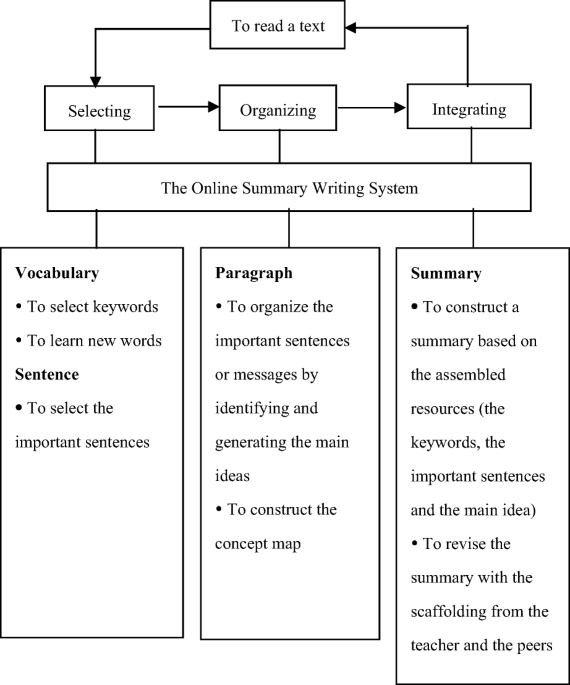
Credit: link.springer.com
Choosing Effective Keywords
Choosing effective keywords for summary writing is crucial for attracting the right audience to your content. Keywords are the terms or phrases that define the main idea and major points of a piece of writing. When crafting a summary, identifying the most effective keywords is essential for making your content searchable and discoverable. Let’s explore the process of selecting effective keywords for summary writing.
Identify The Main Idea
Start by identifying the main idea or the central theme of the text you are summarizing. This will help you pinpoint the most important keywords that capture the essence of the content. Highlight the core concepts and key points. For instance, if summarizing an article about renewable energy, the main idea could revolve around terms like “renewable energy sources,” “sustainability,” and “clean energy initiatives.”
Consider Synonyms And Related Terms
It’s essential to consider synonyms and related terms that can supplement your primary keywords. Ensure you include alternative phrases and variations of your keywords that readers might use when searching. Utilizing synonyms and related terms enhances the possibility of your content appearing in diverse search queries. For example, for the main idea “renewable energy,” related terms could include “alternative energy,” “green energy,” and “sustainable power sources.”
Placement Of Keywords
Keywords in summary writing play a crucial role in enhancing search engine optimization (SEO) and increasing organic traffic to your content. Proper placement of keywords throughout your writing can improve its visibility and relevance, boosting its chances of being discovered by your target audience.
The placement of keywords in summary writing is crucial for search engine optimization. Proper placement ensures that the content is search-engine friendly and easy for readers to find. Here’s how to ensure that keywords are strategically positioned throughout your content.Include In Title And Introduction
When composing a summary, make sure to include the primary keyword in the title and introduction. This signals to both search engines and readers the primary focus of the content. Placing the keyword towards the beginning of the title and introduction is especially effective.Sprinkle Throughout The Body
Once the keyword is established in the title and introduction, sprinkle variations of it throughout the body of the summary. This reinforces the relevance of the topic to search engines while also providing readers with a clear understanding of the content. Do not overdo it; the keyword should appear naturally within the text. Remember, it’s essential to strike a balance, ensuring that the entire summary is well-written and engaging for readers, while still being SEO-friendly. Additionally, the keyword should appear in the meta description to further enhance the search engine optimization of the content. By strategically placing keywords, writers can optimize their summary for both search engines and readers, increasing the chances of discoverability and providing valuable content. Utilizing these techniques ensures that the summary effectively serves its intended purpose.
Credit: msjordanreads.com
Avoiding Keyword Stuffing
Keyword stuffing is a black-hat SEO technique that involves excessively repeating keywords in an attempt to manipulate search rankings. This practice not only violates search engine guidelines but also compromises the quality and value of content. As a content writer, it is crucial to maintain the integrity of your writing by avoiding keyword stuffing. In this section, we will explore two effective strategies to maintain a natural flow and focus on quality over quantity, ensuring your writing remains authentic and valuable to both readers and search engines.
Maintain A Natural Flow
One of the key aspects of a well-written summary is maintaining a natural flow throughout the content. While it may be tempting to repeatedly include keywords to boost SEO, this can disrupt the reading experience and make the content appear spammy. Instead, focus on incorporating keywords organically and seamlessly into the text.
- Avoid keyword repetition: Instead of constantly repeating the same keyword, use synonyms or related terms that convey the same meaning. This not only diversifies your vocabulary but also enriches the content for readers.
- Use long-tail keywords: Long-tail keywords, which are more specific phrases, allow you to naturally incorporate them in a comprehensive manner. For example, instead of using the broad keyword “summary writing,” opt for a long-tail keyword like “tips for writing concise summaries.”
- Focus on context: Rather than forcefully inserting keywords into sentences, prioritize the overall context and meaning of the content. Ensure that your sentences flow naturally and make sense to the reader.
Focus On Quality Over Quantity
When it comes to keywords in summary writing, quality should always be valued over quantity. Search engines are becoming smarter in analyzing content and are more inclined towards delivering valuable information to users. Hence, it is essential to create high-quality content that resonates with both readers and search engines.
- Write for your audience: Instead of solely focusing on keyword placement, prioritize the needs and interests of your target audience. Craft engaging and informative content that provides value, and the keywords will naturally find their place within the text.
- Use keyword variations: Instead of repetitively using the same keyword, incorporate variations that hold similar meaning. This not only diversifies your content but also ensures a more natural use of keywords.
- Optimize other elements: Apart from keyword placement in the text, optimize other elements such as meta tags, titles, headings, and URLs. This comprehensive approach helps search engines understand the relevance of your content without resorting to keyword stuffing.
By following these strategies, you can strike a balance between incorporating keywords for SEO purposes and maintaining the integrity and value of your content. Remember, quality content that meets the needs and expectations of your readers will have a higher chance of ranking well in search engine results. So, focus on maintaining a natural flow and emphasizing quality over quantity when utilizing keywords in summary writing.
Keywords In Summaries
When it comes to writing summaries, keywords play a critical role in capturing the essence of the text concisely and effectively. Keywords are specific words or phrases that are strategically chosen to represent the main ideas and concepts discussed in the original content. In this section, we will explore the significance of keywords in summaries and understand how to craft a concise summary while highlighting key ideas.
Crafting A Concise Summary
Crafting a concise summary is essential to capture the attention of readers and convey the main points of the original content effectively.
Here are some strategies to craft a concise summary:
- Identify the main ideas: Read the original text carefully and identify the main ideas and key concepts discussed.
- Focus on essential information: Filter out any unnecessary details and focus only on the information that is crucial to understanding the main points.
- Use clear and concise language: Express the main ideas of the original content using clear and concise language, avoiding any ambiguity or unnecessary complexity.
- Trim down the length: Keep the summary short and to the point by eliminating any redundant information or repetitive phrases.
Highlighting Key Ideas
While crafting a summary, it is vital to highlight the key ideas that provide a comprehensive understanding of the original content. By strategically utilizing keywords, these key ideas can be emphasized effectively.
Here are some ways to highlight key ideas in your summary:
- Identify relevant keywords: Analyze the original text and identify the most important words and phrases that represent the main ideas.
- Place keywords strategically: Integrate the keywords naturally within the summary, ensuring they are placed at crucial points to highlight the main concepts.
- Use synonyms and related terms: Incorporate synonyms or related terms alongside the keywords to enrich the summary and provide a more comprehensive insight into the main ideas.
- Consider context and relevance: Make sure the chosen keywords accurately reflect the context and relevance of the original content, as this will enhance the overall quality of the summary.

Credit: msjordanreads.com
Frequently Asked Questions Of What Are Keywords In Summary Writing
How Do You Write Keywords In A Summary?
To write keywords in a summary, follow these guidelines: Keep sentences under 20 words and write in an SEO-friendly, unique, and plagiarism-free manner. Use active voice and avoid starting sentences with phrases like “When it comes to” or “If you.
” Additionally, avoid passive voice and words like “Furthermore” or “In conclusion. ” Pass AI writing detection and aim for a concise answer within 50 words.
What Is An Example Of A Keyword?
An example of a keyword is “digital marketing strategy”. It’s a term used for online searches and helps to categorize content.
What Are 5 Key Features Of Summary Writing?
The 5 key features of summary writing are brevity, clarity, accuracy, objectivity, and coherence. Summaries should be concise, convey the main points accurately, remain unbiased, and flow smoothly. Using these features helps to effectively condense and communicate the main ideas of a piece of writing.
Conclusion
Keywords play a crucial role in enhancing the effectiveness of your writing. By strategically incorporating relevant keywords, you can optimize your content for search engines and improve its visibility and reach. By understanding the importance of keywords in summary writing, you can create concise, informative, and engaging content that resonates with your target audience.
The careful selection and placement of keywords can significantly impact the overall success of your writing efforts. Start implementing this valuable SEO strategy to elevate your content to new heights.


