
What is a Fluency Reading Inventory?
A Fluency Reading Inventory is a tool used to assess a student’s reading speed and accuracy. It measures the ability to decode and comprehend text fluently.
Teachers and educators use the results to tailor instructional strategies and support students’ literacy development. By identifying areas of improvement, the inventory helps to foster a more efficient and engaging learning process. Administering the assessment provides valuable insight into individual student needs and helps to monitor progress over time.
With a focus on fluency, the inventory supports the development of essential reading skills, ultimately enhancing overall literacy proficiency.
Definition Of A Fluency Reading Inventory
When administering a Fluency Reading Inventory, it is essential to understand its definition and components. A Fluency Reading Inventory is a tool used by educators to assess a student’s reading fluency, accuracy, and comprehension. It provides valuable insights into a student’s reading abilities and helps tailor instructional strategies to support their reading development. Let’s take a closer look at what this tool encompasses.
Components Of A Fluency Reading Inventory
The Fluency Reading Inventory typically consists of three main components:
- Reading Aloud: This component assesses a student’s fluency and accuracy by having them read a passage aloud while the examiner records any errors and calculates the reading rate.
- Comprehension Questions: After reading a passage, students answer questions to evaluate their understanding of the text and their ability to extract meaning from the material.
- Retelling or Summary: Students are asked to summarize the passage they just read, demonstrating their ability to recall and synthesize information from the text.
When administering a Fluency Reading Inventory, it is essential to understand its definition and components. A Fluency Reading Inventory is a tool used by educators to assess a student’s reading fluency, accuracy, and comprehension. It provides valuable insights into a student’s reading abilities and helps tailor instructional strategies to support their reading development. Let’s take a closer look at what this tool encompasses.

Credit: www.pinterest.com
Benefits Of Using A Fluency Reading Inventory
A Fluency Reading Inventory is a valuable tool for assessing a student’s reading skills. Utilizing this inventory can provide educators with invaluable insights into a student’s reading fluency and comprehension abilities. Let’s delve into the various benefits of using a Fluency Reading Inventory:
Assessing Reading Fluency
A Fluency Reading Inventory enables educators to accurately assess a student’s reading fluency, which includes speed, accuracy, and expression while reading aloud. By gauging a student’s fluency, teachers can tailor instructional strategies to meet each student’s specific needs, ultimately fostering improved reading skills.
Identifying Strengths And Weaknesses
Through the use of a Fluency Reading Inventory, educators can pinpoint students’ strengths and weaknesses in reading. This precise identification allows for targeted interventions and support to address areas where students may be struggling, while also nurturing their existing strengths in reading fluency and comprehension.
How To Administer A Fluency Reading Inventory
Administering a fluency reading inventory is a crucial step in assessing a student’s reading abilities. It allows educators to gather valuable insights into a student’s fluency, accuracy, and comprehension skills. In this section, we will discuss the key steps involved in administering a fluency reading inventory, including selecting appropriate texts, timing the reading, and scoring the results.
Selecting Appropriate Texts
When conducting a fluency reading inventory, it is important to carefully select texts that are suitable for the student’s reading level. Choosing texts that are too challenging may result in frustration and poor performance, while texts that are too easy may not provide an accurate assessment of the student’s abilities.
Consider the student’s grade level, reading skills, and interests when selecting texts. It is also beneficial to choose texts that align with the content being taught in the classroom to ensure relevance and engagement. Providing a variety of text genres such as fiction, non-fiction, and poetry can further enhance the assessment process.
Timing The Reading
Timing the reading is an essential aspect of administering a fluency reading inventory. To effectively measure a student’s fluency, it is necessary to record the time it takes for them to read a given text. This allows educators to assess the student’s reading rate and ascertain whether their reading pace is appropriate for their grade level.
During the assessment, ensure that the student reads the text aloud at a normal pace. Use a stopwatch or timer to accurately measure the time taken. It is important to note any interruptions or difficulties the student may encounter during the reading which may impact their fluency performance.
Scoring The Results
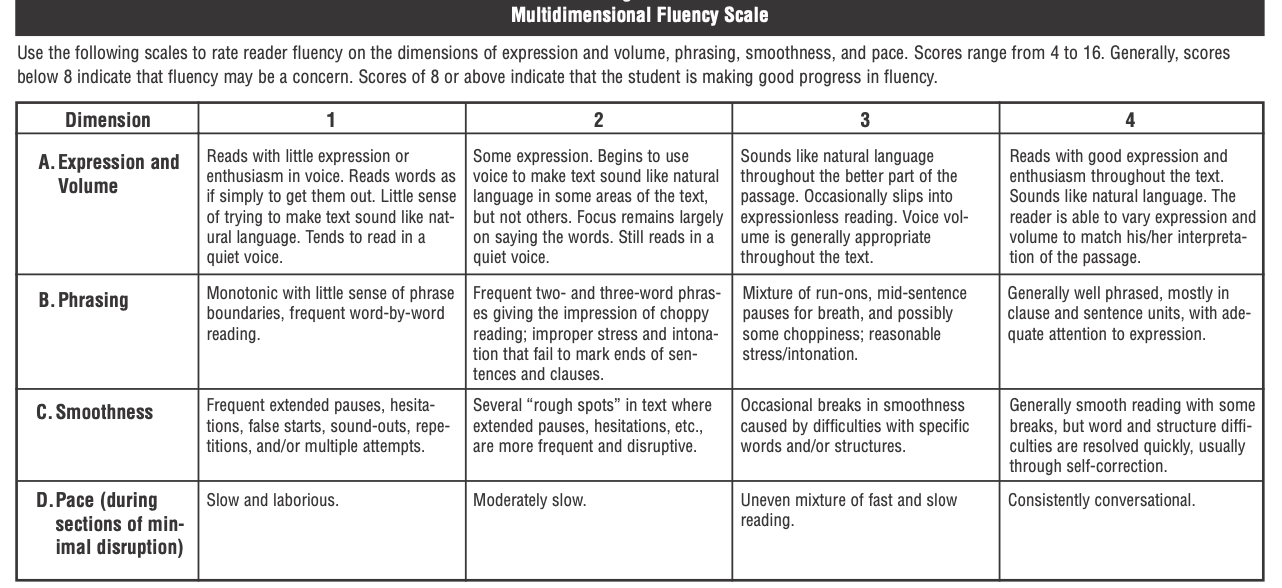
Scoring the results of a fluency reading inventory involves evaluating various aspects of the student’s reading performance, including accuracy, rate, and expression. These components are typically scored using a rubric or guidelines provided by the assessment tool.
Accuracy refers to the student’s ability to read the text correctly, including pronunciation, word recognition, and comprehension. Rate measures the speed at which the student reads the text. Expression focuses on the student’s intonation, phrasing, and overall delivery.
| Component | Scoring Guidelines |
|---|---|
| Accuracy | Score based on the number of errors made during the reading. Each error can be assigned a specific point value. |
| Rate | Calculate the reading rate by dividing the number of words read by the time taken to read the text. Compare the rate to the expected rate for the student’s grade level. |
| Expression | Observe the student’s delivery, paying attention to voice inflection, phrasing, and overall fluency. Assign a score based on the level of expression demonstrated. |
By scoring these components, educators can gain insights into the student’s overall fluency and identify areas for improvement. This information can then be used to tailor instruction and provide targeted support to enhance the student’s reading skills.
Credit: fivefromfive.com.au
Interpreting The Results Of A Fluency Reading Inventory
Interpreting the Results of a Fluency Reading Inventory
When it comes to assessing reading abilities, one of the tools used by educators is a Fluency Reading Inventory. This assessment measures a student’s reading speed, accuracy, and expression, providing valuable insights into their overall reading proficiency. Understanding the results of a Fluency Reading Inventory can help teachers tailor their instruction to individual students’ needs and track their progress over time.
In a Fluency Reading Inventory, one of the key measurements is a student’s fluency rate. Fluency rate refers to the number of words a student can read correctly per minute. It provides a reflection of a student’s reading speed and can help determine if they are reading at grade level. Typically, the benchmarks for fluency rates vary depending on the grade level and specific curriculum, but in general, higher fluency rates indicate stronger reading skills.
Another aspect of interpreting the results of a Fluency Reading Inventory is analyzing errors and self-corrections. When students read aloud during the assessment, errors can occur in the form of mispronunciations, substitutions, omissions, or additions of words. These errors can provide insights into areas where students may struggle, such as decoding unfamiliar words or comprehending the text. Additionally, self-corrections, where a student corrects their own errors, can demonstrate their ability to self-monitor and self-correct while reading.
Analyzing and documenting errors and self-corrections can help teachers identify specific areas for targeted instruction. For example, if a student consistently mispronounces certain words or struggles with decoding multisyllabic words, teachers can design activities and lessons to address these specific challenges. Similarly, if a student is frequently self-correcting errors, it may indicate a strong ability to monitor their reading and make appropriate adjustments, highlighting their metacognitive skills.
Utilizing The Results Of A Fluency Reading Inventory
A fluency reading inventory is a valuable tool that can provide insights into a student’s reading abilities and help identify areas for improvement. Once the inventory is completed, it is essential to utilize the results effectively to develop instructional interventions and monitor progress over time. This ensures that students receive targeted support and achieve improved reading fluency. In this section, we will explore how to use the results of a fluency reading inventory to plan instructional interventions and monitor progress over time.
Planning Instructional Interventions
When analyzing the results of a fluency reading inventory, it becomes easier to identify specific areas where a student may struggle. By pinpointing these challenges, educators can design targeted instructional interventions that directly address the student’s needs. Here are a few strategies:
- Create a personalized reading plan for the student, focusing on the areas that require improvement.
- Utilize instructional materials that align with the student’s reading level and address their specific difficulties.
- Implement strategies such as repeated readings, timed readings, and modeled reading to improve fluency and comprehension.
- Provide regular opportunities for the student to practice reading independently, fostering self-confidence and self-assessment skills.
- Collaborate with other educators and specialists to develop a comprehensive plan tailored to the student’s individual needs.
Monitoring Progress Over Time
Effective progress monitoring is crucial when utilizing the results of a fluency reading inventory. By consistently assessing a student’s reading fluency and comprehension, educators can track their growth and make necessary adjustments to the instructional interventions. Here are some key points to consider:
- Regularly administer fluency assessments to evaluate the student’s reading progress.
- Record and analyze the data to identify trends and patterns in the student’s performance.
- Compare current results with the initial fluency reading inventory to observe improvements or areas that still require attention.
- Use the data to adjust instructional strategies, materials, and goals to better support the student’s ongoing development.
- Communicate and involve the student, their parents, and other stakeholders in the progress monitoring process to ensure everyone is aware of the student’s growth and areas of focus.
Taking these steps to plan instructional interventions and monitor progress over time will maximize the effectiveness of a fluency reading inventory. By utilizing the results in a purposeful and targeted manner, educators can empower students with the necessary strategies and support to become more fluent and confident readers.

Credit: www.havefunteaching.com
Frequently Asked Questions On What Is A Fluency Reading Inventory?
How Does The Reading Inventory Work?
The reading inventory works by assessing a person’s reading skills and abilities. It helps determine their reading level, strengths, and areas for improvement. A variety of reading activities and assessments are used to gather data, which is then analyzed to understand the individual’s reading proficiency and guide their instruction.
What Three Things Must A Fluency Assessment Include?
A fluency assessment must include oral reading accuracy, reading rate, and prosody. These three elements are essential in evaluating a child’s fluency, as they measure not only the accuracy and speed of reading but also the expression and intonation of the reader.
What Is The Difference Between A Qri And An Iri?
A QRI (Query-Related Information) is data related to a specific search query, while an IRI (Index-Related Information) pertains to the overall index. QRI focuses on individual searches, while IRI is broader in scope, covering all indexed information.
Conclusion
To sum up, a Fluency Reading Inventory is a valuable tool for assessing reading fluency. Its systematic approach allows educators to accurately measure a student’s reading abilities and identify areas that require improvement. By utilizing this assessment, teachers can tailor their instruction to better support students’ fluency development.
By implementing Fluency Reading Inventories, educators can empower students to become confident and proficient readers, ultimately fostering academic success.


