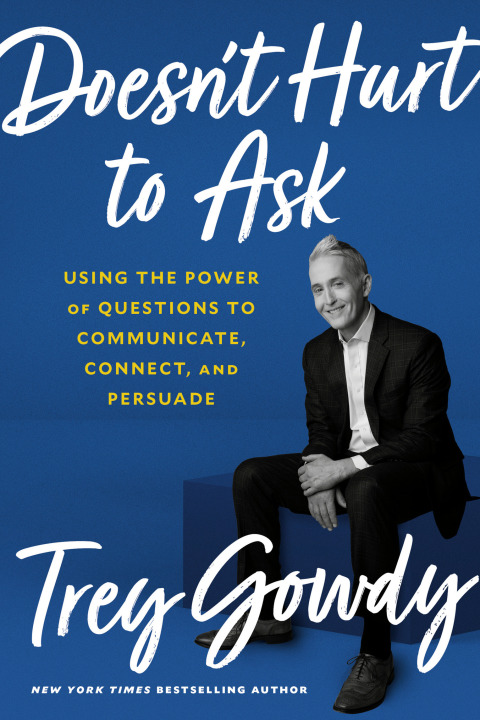
Doesn’t Hurt to Ask by Trey Gowdy
Doesn’t Hurt to Ask by Trey Gowdy is an insightful guide on the art of persuasion and communication, drawing from Gowdy’s legal and political career. He emphasizes the role of asking the right questions, building credibility, and reframing arguments to influence others effectively. With practical advice on questioning techniques, credibility-building, and understanding one’s audience, this book provides valuable tools for anyone aiming to enhance their persuasive abilities.
Who May Benefit from the Book
- Professionals: For enhancing negotiation and persuasive skills in the workplace.
- Students and Educators: To improve critical thinking and discussion techniques.
- Parents and Caregivers: To foster better communication with children and teens.
- Legal and Political Enthusiasts: For insights into courtroom and legislative strategies.
- Anyone in Sales or Customer Service: For effective communication and problem-solving.
Top 3 Key Insights
- Master the Art of Asking Questions
Asking well-crafted questions guides conversations, gathers insights, and leads others toward conclusions subtly. - Build Credibility Through Authenticity
Being genuine and listening attentively builds trust, making others more receptive to your perspective. - Repackage Arguments to Shift Perspectives
Framing information differently can overcome biases and make complex ideas more relatable.
7 More Lessons and Takeaways
- Know Your Objective and Audience: Tailor your approach to the audience’s background and goals to achieve better persuasive results.
- Set Realistic Expectations: Persuasion takes time. Aim for incremental progress rather than immediate results.
- Harness the Power of Repetition: Repeating key points subtly emphasizes importance and improves retention.
- Use Impeachment Techniques: Undermine opposing arguments by questioning the facts, conclusions, or speaker’s credibility.
- Choose Words Carefully: Opt for precise language, avoiding absolutes, to prevent misunderstandings and maintain flexibility.
- Engage Actively: Showing empathy and active engagement through eye contact and open body language fosters trust.
- Embrace Incremental Progress: Aim to open minds slowly, allowing time for seeds of doubt or new ideas to take root.
The Book in 1 Sentence
An insightful guide on mastering the art of persuasion through strategic questioning, credibility-building, and reframing arguments.
The Book Summary in 1 Minute
Trey Gowdy’s Doesn’t Hurt to Ask provides a comprehensive look at persuasion techniques, emphasizing the power of asking questions to subtly direct conversations. He underscores the importance of understanding your audience and setting realistic goals in persuasion, using techniques from his background in law and politics. Through authenticity, repetition, and reframing, Gowdy shows how to shift perspectives and guide others toward desired outcomes. His impeachment strategies add depth to his persuasive methods, teaching readers to challenge assumptions without confrontation. In a concise and engaging style, Gowdy’s book is a toolkit for anyone seeking to enhance their communication and persuasion skills.
The Book Summary in 10 Minutes
Master the Art of Asking Questions
Asking questions is a powerful persuasion technique. Gowdy highlights how various question types, such as open-ended and leading questions, can steer conversations without making direct statements. For instance:
- Non-leading questions help gather unbiased information.
- Leading questions subtly guide the respondent toward a particular answer.
- “Why” questions encourage people to reveal underlying motives.
Through questions, you gather valuable information, uncover weaknesses in arguments, and steer the conversation toward your goals.
Understand Your Objective, Audience, and Burden of Proof
A persuasive approach starts with a clear understanding of your goals and the audience’s background, values, and beliefs. Gowdy recommends calibrating the burden of proof based on your objective, which can vary in intensity depending on the goal—ranging from minimal proof to convince to a higher level of evidence for skeptical audiences.
| Objective | Burden of Proof |
|---|---|
| Consent | Minimal (0%) |
| Articulable Suspicion | 20-25% |
| Probable Cause | 35-50% |
| Preponderance | 50.1% |
| Clear and Convincing | 75% |
| Beyond a Reasonable Doubt | 95% |
Build Credibility with Authenticity
Authenticity builds credibility in any interaction. Gowdy notes that genuine engagement—such as attentive listening, eye contact, and open body language—can make people more receptive. Rather than focusing on saying the “right” thing, he encourages readers to be sincere and show empathy to build trust.
Effective Use of Impeachment Techniques
Gowdy introduces impeachment as a way to challenge opposing arguments. His three-pronged approach to impeachment includes:
- Impeaching the Facts: Question the accuracy of information.
- Impeaching the Conclusion: Probe whether the facts truly support the conclusion.
- Impeaching the Person: Challenge the credibility or motive of the person.
When done judiciously, impeachment weakens the opponent’s position while maintaining credibility.
Leverage Repetition and Precision in Word Choice
Repetition emphasizes key points and ensures retention, but it should be applied subtly. By repeating core ideas sparingly, you can enhance their impact. Precision in word choice—avoiding absolutes like “never” or “always”—adds flexibility and minimizes misunderstandings. Clarity around key terms strengthens arguments and ensures alignment with the audience’s understanding.
Reframe Arguments to Change Perspectives
Reframing, or repackaging, offers a way to present information from a fresh angle. Gowdy suggests reframing by using analogies, highlighting unintended consequences, or appealing to shared values. This tactic makes the argument more relatable and helps to overcome cognitive biases.
Set Realistic Expectations and Embrace Incremental Progress
Finally, Gowdy encourages setting achievable goals in persuasion and recognizing that change is often gradual. Success may be in gaining small concessions, gradually shifting perceptions, or just opening the door to dialogue.
| Outcome | Measure of Success |
|---|---|
| Reconsidering their position | Partial victory |
| Listening without prejudice | Improved rapport |
| Small shifts in beliefs | Incremental gain |
Applying Persuasion as a Long-Term Strategy
Gowdy’s advice centers on patience, as real persuasion is often a series of subtle and cumulative efforts. Understanding that persuasion is rarely immediate encourages persistence and dedication to refining one’s approach over time.
About the Author
Trey Gowdy is a former prosecutor and U.S. Congressman known for his expertise in criminal justice and his tenure on the House Oversight and Government Reform Committee. His experience in law and politics informs his insights on persuasion. A recognized public speaker and advocate, Gowdy frequently shares his perspectives on legal and communication strategies, drawing on years of courtroom experience to offer practical advice for effective persuasion.
How to Get the Best of the Book
To maximize the book’s value, take notes on specific techniques that resonate with your needs, such as questioning methods or credibility-building tips. Practice the tactics gradually in real conversations to gain familiarity and confidence.
Conclusion
In Doesn’t Hurt to Ask, Trey Gowdy equips readers with practical persuasion skills through strategic questioning, credibility-building, and reframing. His advice, rooted in legal and political experience, serves as a valuable toolkit for anyone looking to enhance their influence. By mastering these techniques, readers can approach conversations with confidence, guiding them toward successful outcomes.