Deep Medicine by Eric Topol – Summary
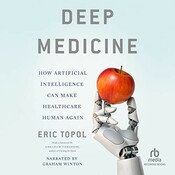
“Deep Medicine” by Eric Topol is a visionary exploration into how artificial intelligence (AI) can revolutionize healthcare. Published in 2019, the book offers an in-depth analysis of how AI can address the shortcomings of current medical practices, particularly the “shallow” nature of patient care. With over 270,000 citations, Topol brings a wealth of expertise to his examination of how AI could transform diagnostics, treatment, and patient interactions, making healthcare more accurate and empathetic.
Who May Benefit from the Book
- Healthcare professionals seeking innovative ways to enhance patient care.
- Medical students interested in the future of medicine and technology integration.
- Technology enthusiasts keen on the impact of AI in healthcare.
- Individuals dissatisfied with current medical practices looking for hopeful solutions.
7 Key Lessons and Takeaways
- AI can significantly improve diagnostic accuracy and treatment efficiency.
- Personalized healthcare through AI can restore the personal touch often lost in modern medicine.
- AI helps reduce diagnostic errors and avoid unnecessary procedures.
- Advanced data analysis through AI supports better understanding of genetic conditions.
- AI can alleviate the burden on healthcare professionals by automating routine tasks.
- The integration of AI in healthcare can lead to shorter hospital stays and remote patient monitoring.
- Ethical considerations and data privacy are crucial as AI becomes more embedded in medical practices.
The Book in 20 Words
Eric Topol’s “Deep Medicine” explores how AI can transform healthcare, enhancing diagnostics, treatment, and patient relationships while restoring empathy.
The Book Summary in 1 Minute
“Deep Medicine” by Eric Topol explores how artificial intelligence (AI) can profoundly transform healthcare. Topol critiques the “shallow” state of current medical practices, where healthcare professionals are often overburdened and disconnected from patients. He envisions AI as a solution, offering improved diagnostic accuracy, personalized treatment, and enhanced patient interactions. The book discusses practical examples, like AI’s role in identifying rare conditions and predicting mental health issues, while acknowledging limitations such as data quality and the need for human intuition. Overall, it advocates for a future where AI complements human empathy, making healthcare more effective and humane.
The Book Summary in 10 Minutes
Introduction: The Need for Change in Healthcare
Eric Topol’s “Deep Medicine” addresses the current shortcomings in healthcare—overburdened professionals and superficial patient interactions. Topol proposes that artificial intelligence (AI) could bridge this gap, offering both technological advancements and a renewed personal touch.
AI and Diagnostic Revolution
AI has the potential to dramatically enhance diagnostic accuracy. For example, machine learning algorithms can analyze vast datasets to identify patterns undetectable to human eyes. This capability has already demonstrated life-saving potential, such as diagnosing rare infections in newborns. AI’s prowess extends to predicting mental health crises, potentially using smartphones to detect early signs of conditions like depression.
The AI-Augmented Patient Experience
AI can transform patient care beyond the traditional hospital setting. Virtual hospitals and remote monitoring systems could reduce hospital stays and allow patients to recover at home. This not only optimizes resources but also improves patient comfort and efficiency in care delivery.
From Shallow to Deep Medicine
Shallow medicine is characterized by brief patient interactions and a high rate of misdiagnoses. Topol advocates for “deep medicine,” which involves a more comprehensive understanding of each patient, powered by AI. This approach includes harnessing AI to handle routine tasks, thereby allowing healthcare professionals to focus on empathetic and personalized patient care.
The Role of AI in Enhancing Medical Precision
AI’s capacity to process and analyze data far exceeds human capabilities. In fields like radiology, pathology, and dermatology, AI tools can sift through large volumes of medical images and patient data to identify anomalies and support diagnosis. AI-assisted tools like PathAI and Face2Gene demonstrate significant improvements in diagnostic accuracy when combined with human expertise.
AI as a Supportive Healthcare Partner
Rather than replacing human physicians, AI serves as a supportive partner. It helps mitigate biases and enhances decision-making processes. AI’s role is to handle routine data processing and provide insights that can guide doctors in making more informed decisions, without substituting the essential human elements of care.
Ethical and Practical Considerations
The integration of AI into healthcare must address ethical issues, including data privacy and potential misuse. AI systems depend heavily on the quality of data they are trained on, and there is a risk of perpetuating existing biases or errors if the data is flawed. Therefore, strong regulatory measures are necessary to protect patient information and ensure fair use of AI technologies.
Personalized Medicine and AI
AI’s ability to tailor healthcare recommendations to individual needs is a significant leap forward. The Weizmann Institute’s research on personalized diets based on AI analysis of blood sugar responses is an example of how AI can offer customized solutions for better health outcomes. Similarly, virtual medical assistants are emerging to provide individualized health advice and early warnings of potential issues.
The Future of Empathy in Medicine
Despite AI’s advancements, the core of medicine remains a deeply human endeavor. Topol envisions a future where AI handles technical aspects, allowing doctors to reconnect with patients on a more personal level. The goal is to restore empathy and trust in medical interactions, ensuring that the technological evolution enhances rather than diminishes the human element of care.
About the Author
Eric Topol is a leading cardiologist and researcher, known for his pioneering work in digital medicine and AI. He is the Executive Vice President of Scripps Research and has authored several influential books on medicine and technology. His extensive bibliography and deep expertise in the field make him a prominent voice in the conversation about the future of healthcare.
Deep Medicine Quotes by Eric Topol
“Eventually, doctors will adopt AI and algorithms as their work partners. This leveling of the medical knowledge landscape will ultimately lead to a new premium: to find and train doctors who have the highest level of emotional intelligence.”
How to Get the Best of the Book
To maximize the benefits of “Deep Medicine,” focus on integrating its insights into practical applications in healthcare settings. Embrace AI tools to enhance diagnostic accuracy and streamline routines, while prioritizing the restoration of empathetic patient care.
Conclusion
“Deep Medicine” offers a compelling vision for the future of healthcare, where AI enhances diagnostic precision and personalizes patient care without losing the human touch. Eric Topol’s insights encourage a harmonious blend of technology and empathy, promising a more effective and compassionate healthcare system.