The Art of Money Getting: Golden Rules for Making Money by P.T. Barnum
The Art of Money Getting; or, Golden Rules for Making Money by P.T. Barnum is a classic book on wealth, work ethic, and integrity. Barnum, a famous entrepreneur and showman, provides practical advice on building and preserving fortune. His rules combine common sense, prudence, and morality. Written in simple words, the book offers timeless lessons for anyone seeking financial security.
Who May Benefit from the Book
- Young professionals searching for financial discipline and guidance
- Entrepreneurs aiming to grow their businesses wisely
- Students seeking direction in career choices
- Readers interested in wealth-building and character development
- Anyone struggling with debt or financial mismanagement
Top 3 Key Insights
- True economy means spending less than you earn, not being miserly.
- Perseverance and self-reliance are essential for lasting success.
- Integrity and honesty are the strongest foundations for wealth and reputation.
4 More Lessons and Takeaways
- Choosing the right vocation and location matters as much as effort. Success follows when skill meets demand.
- Debt is a dangerous form of slavery. Living within means keeps a man free and respected.
- Business requires focus. Dividing attention across too many ventures brings failure.
- Politeness, charity, and fairness to customers and workers increase goodwill, which ensures long-term profit and legacy.
The Book in 1 Sentence
Barnum teaches that financial success is built on economy, persistence, integrity, wise choices, and respect for others.
The Book Summary in 1 Minute
P.T. Barnum’s The Art of Money Getting delivers practical rules for earning and keeping wealth. He stresses economy, health, honesty, and self-reliance as essential foundations. Barnum warns against debt, vanity, and scattering energy across too many ventures. He emphasizes choosing the right career, working diligently, and treating customers with kindness. Integrity, charity, and systematic work are highlighted as keys to financial and personal fulfillment.
The Book Summary in 7 Minutes
Barnum opens his book with a reminder that wealth without health is meaningless. Good health is the foundation of success. He argues that in America, opportunities are abundant, and the road to wealth is plain: spend less than you earn.
The Art of Money Getting; or, Golden Rules for Making Money, authored by P.T. Barnum (America’s second millionaire) and originally published in 1880 and released as an eBook on July 1, 2005, lays out essential rules for achieving and maintaining financial success. Barnum posits that in the United States, where there is an abundance of opportunity, it is relatively easy for healthy individuals to make money, but the difficult part is keeping it. The path to wealth is described as “as plain as the road to the mill” and simply requires “expending less than we earn”. Barnum emphasizes that good health is the fundamental “substratum fortune” necessary for happiness and ambition. Ultimately, money-getting, when pursued honestly and used to benefit humanity, is laudable, as financial successes often fund institutions of learning and art. The principles detailed by Barnum and others in older versions of this text are considered “even more applicable today than ever”.
Preliminary Section: Economy and Health
Barnum dedicates significant discussion to defining true economy, clarifying that it is often “misapprehended” and mistaken for meanness. True economy is the consistent practice of making the income exceed the out-go. He criticizes the societal pressure to keep up appearances, warning that “it is the eyes of others and not our own eyes which ruin us”. Furthermore, sound health is crucial for success, as a sick person lacks ambition and force. Barnum condemns the knowing violation of natural laws, citing the dangers of poor ventilation and unnatural appetites like tobacco and intoxicating drinks, which muddle the brain necessary for clear business judgment.
Notable Quote:
- “True economy consists in always making the income exceed the out-go”.
Key Points:
- Rational saving is necessary.
- Avoid debt driven by vanity.
- Sound health is basis of fortune.
DON’T MISTAKE YOUR VOCATION
The most reliable plan for success is selecting a vocation that is most congenial to one’s natural tastes and peculiar genius. Barnum notes a natural diversity in brains and aptitudes—some are natural mechanics, others are not. If a person pursues a calling for which they are not fitted, they will spend their life “working up hill”.
Notable Quote:
- “Unless a man enters upon the vocation intended for him by nature, and best suited to his peculiar genius, he cannot succeed”.
Key Points:
- Select work based on genius.
- Parents should not dictate careers.
- Misplaced workers struggle unnecessarily.
SELECT THE RIGHT LOCATION
After choosing the correct vocation, the proper location is critical. Even a talented individual, like an excellent hotel keeper, will be ruined if they choose a location with no public travel or too much existing competition. If a man is failing due to a bad location (“in the fire”), he should relocate immediately.
Notable Quote:
- “If you should locate your house in a small village where there is no railroad communication or public travel, the location would be your ruin”.
Key Points:
- Location must fit the demand.
- Avoid crowded occupations.
- Relocate if the current area is failing.
AVOID DEBT
Young men should diligently avoid running into debt, especially debt accumulated for personal consumption (eating, drinking, wearing), as this is a “slavish position” that robs self-respect. Debt is referred to as “working for a dead horse”. Money should work for the individual (earning interest) rather than working against them (accumulating interest owed), because money is an excellent servant but a terrible master. The “philosopher’s stone” of finance is John Randolph’s maxim: “pay as you go”.
Notable Quote:
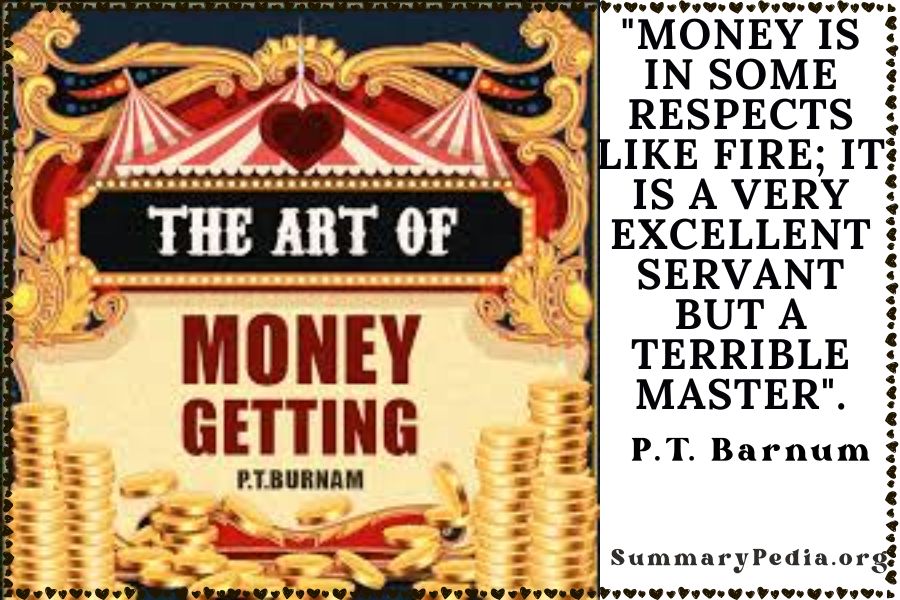
- “Money is in some respects like fire; it is a very excellent servant but a terrible master”.
Key Points:
- Debt is a “slavish position”.
- Creditors have excellent memories.
- Let money work for you.
PERSEVERE
Perseverance is necessary once a person is on the right path. It involves “go-aheaditiveness” and determination to prevent oneself from relaxing energies in the struggle for independence. Many lose the “golden prize” by losing faith in themselves just before reaching their ambition. Perseverance is also synonymous with self-reliance, and those lacking it are prone to borrowing trouble and failing to succeed.
Notable Quote:
- “Be sure you are right, then go ahead”.
Key Points:
- Cultivate “go-aheaditiveness”.
- Self-reliance is essential.
- Diligence makes rich.
WHATEVER YOU DO, DO IT WITH ALL YOUR MIGHT
Success requires working thoroughly, “early and late, in season and out of season,” and never postponing work that can be done immediately. Ambition, energy, industry, and perseverance are prerequisites. Fortune favors those who help themselves, and waiting for something to “turn up” often leads to ruin. A man must know his business thoroughly, learning through personal application and experience, as “like causes produce like effects”.
Notable Quote:
- “Whatever is worth doing at all, is worth doing well”.
Key Points:
- Work thoroughly, never defer.
- Personal exertion is necessary.
- Be cautious in planning, bold in execution.
USE THE BEST TOOLS
Employers must secure the best “living tools” (employees). It is wise to keep good employees who gain valuable experience, making them worth more each year. When hiring, the “brain” is the important element; employees who “think” are vastly more valuable than mere “hands”.
Notable Quote:
- “You can see bills up, ‘Hands Wanted,’ but ‘hands’ are not worth a great deal without ‘heads'”.
Key Points:
- Employ the most skilled people.
- Retain experienced workers.
- Prioritize thinking ability.
DON’T GET ABOVE YOUR BUSINESS
Young men make a mistake believing they can succeed with borrowed or unearned money. Money is valueless unless its worth is learned through experience, effort, and self-denial. The general rule is that poor boys often get rich, while rich boys, raised in luxury and inexperienced, often get poor. Success requires rising in one’s own trade, and the great ambition should be to excel all others in that occupation, as no profession is overcrowded in the “upper story”.
Notable Quote:
- “Nine out of ten of the rich men of our country to-day, started out in life as poor boys, with determined wills, industry, perseverance, economy and good habits”.
Key Points:
- Earned capital is essential.
- In America, the man makes the business.
- Aim to excel everyone else.
LEARN SOMETHING USEFUL
Due to life’s frequently changing fortunes—rich today and poor tomorrow—every person should learn a useful trade or profession. This knowledge provides something tangible to “fall back upon” and can prevent future misery if means are unexpectedly lost.
Notable Quote:
- “Every man should make his son or daughter learn some useful trade or profession”.
Key Points:
- Fortunes can reverse quickly.
- A trade is security.
- Ensures a reliable fallback plan.
LET HOPE PREDOMINATE, BUT BE NOT TOO VISIONARY & DO NOT SCATTER YOUR POWERS
Many remain poor because they are too visionary, constantly changing businesses, and remain “under the harrow”. Success requires concentrating undivided attention on one kind of business and sticking to it faithfully. The mind, focused on one object, constantly suggests valuable improvements that would be missed if powers were scattered across “too many irons in the fire”.
Notable Quote:
- “A constant hammering on one nail will generally drive it home at last, so that it can be clinched”.
Key Points:
- Avoid constant business changes.
- Focus attention on one goal.
- Scattering powers leads to loss.
BE SYSTEMATIC
System is crucial in business, meaning having a time and place for everything and doing work promptly. A systematic person accomplishes twice the work with half the effort, creating leisure time. However, one must maintain a “happy medium,” as being too systematic can result in “red tape” formality and no results (illustrated by the hotel waiter story).
Notable Quote:
- “A person who does business by rule, having a time and place for everything, doing his work promptly, will accomplish twice as much and with half the trouble”.
Key Points:
- System increases efficiency.
- Be punctual in appointments.
- Avoid being overly rigid.
READ THE NEWSPAPERS
It is mandatory to subscribe to a trustworthy newspaper to stay thoroughly posted on world transactions. In this modern era of telegraphs and steam, he who neglects the papers is “cut off from his species” and will quickly find his business “left out in the cold” due to missed inventions and improvements.
Notable Quote:
- “He who is without a newspaper is cut off from his species”.
Key Points:
- Stay current on global events.
- Newspapers inform of modern improvements.
- Failure to read leads to isolation.
BEWARE OF “OUTSIDE OPERATIONS”
Sudden poverty often results when successful businessmen are tempted away from their legitimate trade by “outside operations” or speculations they do not understand. When a man turns from his practiced business, “his strength has departed”. While investing moderately in promising ventures is acceptable, a man should never foolishly risk a fortune earned in a legitimate way.
Notable Quote:
- “However successful a man may be in his own business, if he turns from that and engages ill a business which he don’t understand, he is like Samson when shorn of his locks his strength has departed”.
Key Points:
- Success is tied to expertise.
- Avoid unknown speculations.
- Invest moderately, never risk all.
DON’T INDORSE WITHOUT SECURITY
Barnum strongly advises against endorsing a note or becoming security for anyone, including family members, unless the amount is affordable to lose and is secured by good collateral. Signing a note easily tempts the borrower into “hazardous speculations” away from their legitimate business. The wise course is to insist on “ample security” for the friend’s own protection.
Notable Quote:
- “Solomon truly said ‘he that hateth suretiship is sure'”.
Key Points:
- Avoid easy endorsements.
- Require good security always.
- Easy money encourages speculation.
ADVERTISE YOUR BUSINESS
Those dealing with the public must ensure their goods are valuable, genuine, and satisfying. If the article is good, the fact must be advertised, as advertising is the “sowing” that precedes the “reaping”. Since the public reads newspapers widely, this is an excellent channel. Barnum warns that advertising must be persistent (“a little is a dangerous thing”) until the public is fully informed. Striking methods, like Genin the hatter buying an expensive ticket, can attract attention, but quality must follow.
Notable Quote:
- “Advertising is like learning—’a little is a dangerous thing!'”.
Key Points:
- Goods must be genuine.
- Advertising must be persistent.
- Attract attention, then satisfy.
BE POLITE AND KIND TO YOUR CUSTOMERS
Politeness and civility are identified as the “best capital ever invested in business”. Large stores and grand advertisements are rendered useless if patrons are treated abruptly. The man who gives the greatest amount of quality goods for the least sum, while still reserving a profit, succeeds best. Customers should be treated according to the Golden Rule, as those who drive “sharp bargains” will not see customers again.
Notable Quote:
- “Politeness and civility are the best capital ever invested in business”.
Key Points:
- Civility retains patronage.
- Treat customers liberally.
- Avoid abrupt treatment.
BE CHARITABLE
Being charitable is both a duty and a pleasure, but even as a matter of policy, a liberal man will command patronage while a miser will be avoided. The most effective charity helps those willing to help themselves; Barnum advises against “promiscuous almsgiving” without inquiring into the applicant’s worthiness.
Notable Quote:
- “There is that scattereth and yet increaseth; and there is that withholdeth more than meet, but it tendeth to poverty” (Solomon).
Key Points:
- Charity secures patronage.
- Give from the heart.
- Help people help themselves.
DON’T BLAB
Men should avoid the foolish habit of sharing business secrets, including profits, hopes, expectations, or intentions, as nothing is gained and much can be lost. This caution applies equally to conversations and written letters. If a man is losing money, he should be especially cautious, or he risks losing his reputation.
Notable Quote:
- “Say nothing about your profits, your hopes, your expectations, your intentions”.
Key Points:
- Keep business secrets.
- Avoid sharing expectations.
- Guard reputation carefully.
PRESERVE YOUR INTEGRITY
Integrity is declared to be “more precious than diamonds or rubies”. Dishonesty is the most difficult path to wealth, as prisons are full of those who attempted it. Strict honesty forms the foundation of all financial success. A known honest man, even if poor, commands the purses of the community, because people know he will repay what he borrows. Thus, the maxim that “honesty is the best policy” never fails.
Notable Quote:
- “Strict honesty, not only lies at the foundation of all success in life (financially), but in every other respect”.
Key Points:
- Integrity is paramount.
- Dishonesty closes avenues to success.
- Honesty secures trust.
About the Author
Phineas Taylor Barnum (1810–1891) was an American showman, businessman, and politician, best known for founding the Barnum & Bailey Circus. He earned fame for his exhibitions of curiosities and entertainment enterprises. Despite controversy, Barnum built a reputation as one of the most successful entrepreneurs of the 19th century. Beyond show business, he wrote extensively on money, character, and industry, blending practical wisdom with moral lessons. His influence extended to philanthropy, education, and civic life, where he advocated for perseverance, honesty, and innovation.
How to get the best of the Book
Read one chapter at a time, then reflect on how the lesson applies to your personal or business life. Keep notes and revisit them often.
Conclusion
P.T. Barnum’s The Art of Money Getting outlines a framework for prosperity rooted in common sense, moral behavior, and unwavering focus. His rules emphasize self-reliance, strict economy that ensures income exceeds expenses, persistent perseverance in a congenial and well-located business, and tireless personal application. Above all, Barnum stresses that integrity and honesty are the non-negotiable foundations for financial and personal success. While the inordinate love of money is harmful, money itself, when acquired and used properly, enables one to bless humanity and support social goods. This enduring wisdom, according to modern readers like Russell Brunson, remains highly applicable today.

